Why You Need Leave-In Conditioner for Dogs for Healthier Fur
This may be the last dog coat care guide you’ll ever need. They’re not “just dogs,” they’re family. I once felt useless as I watched my dog Rumi scratch nonstop, making his fur dull and rough. You know how hard it is when your dog’s fur is dry, twisted, or itchy.
The good news? Leave-in conditioner for dogs can make their fur shiny, soft, and comfortable again without having to give them baths or pay a lot for treatments. In this guide, you’ll learn what it is, why it works, and how to make a safe, healthy, cozy coat at home.
What is a Leave-In Conditioner for Dogs?
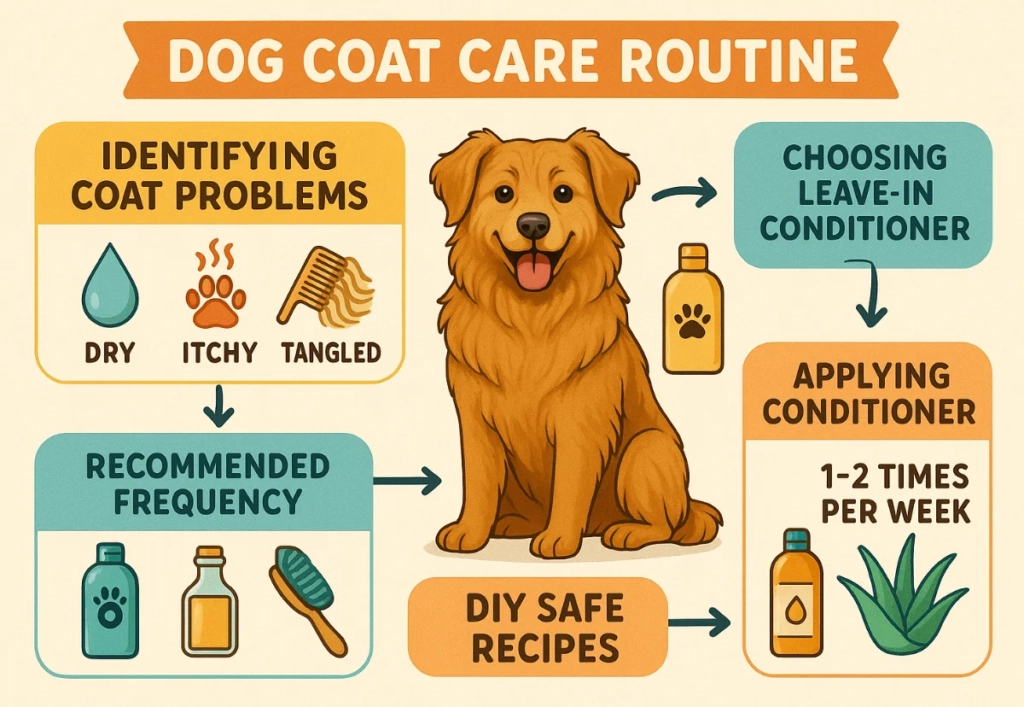
A leave-in conditioner for dogs is a product that you apply after a bath and don’t rinse out. It works even after you wash your dog, leaving his coat soft, hydrated, and easy to handle. It can help with dry, tangled, or itchy skin.
I became aware of how strong this simple item was the first time I used it on my dog Rumi. It’s not easy to groom her because she’s fluffy and full of energy. I used to spend a lot of time combing through her hair after a bath before I started using a leave-in conditioner. It was like a fight, and she hated it just as much as I did. Her fur dried smoother, softer, and knot-free the first time I used a leave-in. Grooming became less of a chore and more of a time to spend together.
Regular Conditioner vs Leave-In Conditioner
Both types of conditioners help, but they work differently. A regular conditioner is applied during the bath and rinsed out. It adds moisture, but once it’s gone, the effect fades quickly.
Leave-in conditioners keep working long after the bath is over. They put a thin coating on the fur to keep it moist and prevent knots. When it came to Rumi, I saw the most change behind her ears. No matter how well I brushed, knots always formed there. The knots almost went away after I started using a leave-in. It saved me time, made her feel better, and kept her coat looking nice for days instead of just hours.
Why It’s Designed for Dogs
Dogs aren’t little humans in fur coats. Their skin has a higher pH than ours, and that makes it more sensitive. Using human products can dry out or irritate their skin, even if they smell nice or feel silky to us.
When I worked at the dog farm in the Ozarks, I saw many owners unknowingly cause skin issues by using products meant for people. And this is why I always recommend dog-specific conditioners. They’re balanced for canine skin and tailored to different coat types.
Take Rumi for example. She has a medium-length coat that needs moisture but not heavy buildup. The right leave-in keeps her coat soft without making it greasy. It protects her natural oils instead of stripping them away. And the difference shows, not just in how shiny she looks, but in how comfortable and happy she feels.
Can I Use a Leave-In Conditioner on My Dog?
Yes, you can use a leave-in conditioner on your dog, but only if it is made for pets. Human products are not safe because a dog’s skin and coat have different needs. Using the wrong conditioner can cause irritation, dryness, or even allergies.
The Risks of Using Human Products
Our skin is more acidic than a dog’s. We can upset the skin’s natural balance when we use items made for people. Dry, itchy, or even hot skin can be a sign of this.
Many human shampoos also contain sulfates, parabens, or strong scents. These bother people too, not just dogs. They can be dangerous if your dog licks their fur and eats them, too. During grooming sessions, I saw dogs with upset stomachs come to the vet office after using human products. It takes place more often than you think.
No products found.
Why Pet-Specific Products Are Best
The safest choice is always a conditioner made just for dogs. These are pH-balanced and free from harsh chemicals. They hydrate and protect the coat without risking your dog’s health.
When I switched Rumi to a dog-specific leave-in conditioner, the change was clear. Her fur became softer, shinier, and much easier to brush. Most importantly, the itching stopped. Knowing she is comfortable gives me peace of mind every time I groom her.
How to Make Leave-In Conditioner for Dogs (DIY Recipes)
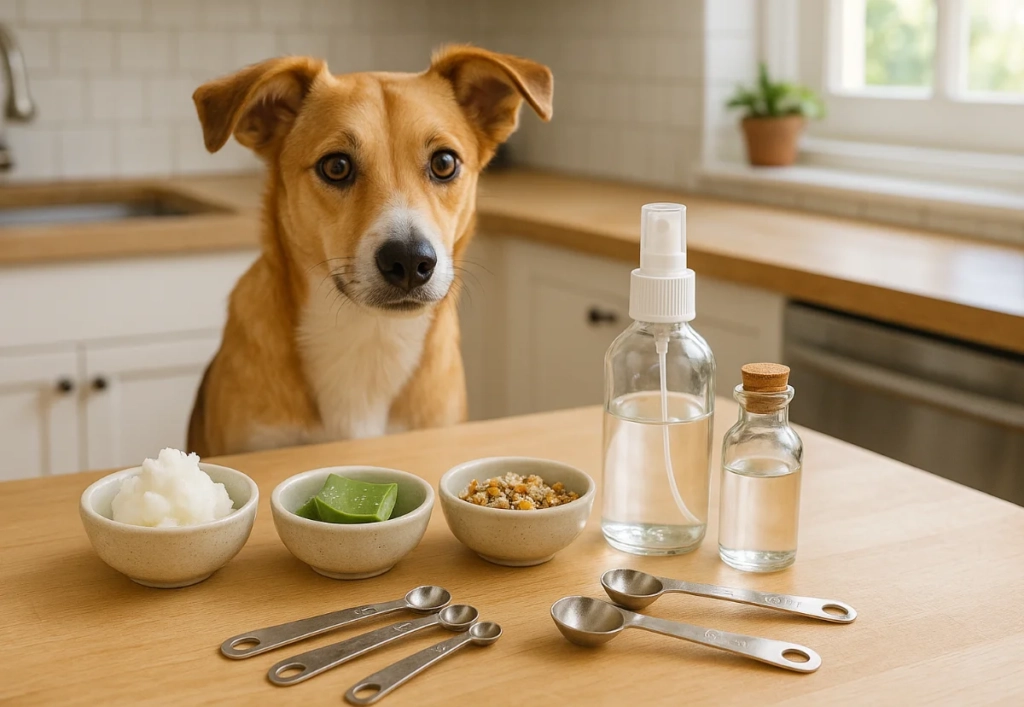
You can make a safe leave-in conditioner for your dog at home with simple natural ingredients. Coconut oil, aloe vera, and oatmeal are some of the best options because they hydrate the coat and soothe the skin. It’s quick, affordable, and free from harsh chemicals.
The 3 recipes I use most often are aloe vera with coconut oil for hydration and oatmeal water with a little apple cider vinegar for itch relief. Both are easy to prepare and gentle enough for regular use. They keep Rumi’s coat smooth and shiny without irritation.
Recipe 1: Coconut Oil + Aloe Vera Spray
This leave-in conditioner is a great option for hydrating both the skin and coat, especially if your dog suffers from dry or itchy skin. Aloe vera soothes and heals, while coconut oil deeply moisturises and adds a nice shine.
Ingredients:
- 1 tablespoon coconut oil (melted)
- 1/4 cup aloe vera gel (pure, not the kind with added alcohol)
- 1/2 cup distilled water
- A few drops of lavender essential oil (optional, for a soothing scent)
Instructions:
- In a bowl, mix the melted coconut oil and aloe vera gel together until well combined.
- Add the distilled water and stir until smooth.
- Pour the mixture into a spray bottle (preferably glass for better preservation).
- Optional: Add a few drops of lavender essential oil for a calming fragrance.
- Shake the bottle gently to mix everything.
How to Use: Spray a light mist onto your dog’s dry coat after bath time. Massage it gently into the fur, paying attention to any dry patches or tangles. There’s no need to rinse!
Recipe 2: Oatmeal + Water Leave-In Conditioner
Oatmeal is known for its soothing properties, especially for dogs with sensitive or itchy skin. This recipe is excellent for keeping your dog’s coat soft and their skin calm.
Ingredients:
- 1/4 cup finely ground oatmeal (you can blend it into a powder if you don’t have oat flour)
- 1/2 cup warm water
- 1 tablespoon organic coconut oil (optional, for added moisture)
Instructions:
- In a small bowl, combine the ground oatmeal and warm water. Stir well until the oatmeal is dissolved.
- Add coconut oil (if using) and mix again until fully incorporated into the solution.
- Pour the mixture into a spray bottle and shake to combine.
How to Use: After bathing your dog, lightly spray the leave-in conditioner on their damp coat. Massage it in, focusing on any areas that tend to get dry or itchy.
Recipe 3: Apple Cider Vinegar + Water Spray
This simple recipe is great for dogs who suffer from skin irritation or need extra shine. Apple cider vinegar helps balance the skin’s pH, while the water hydrates and refreshes the coat.
Ingredients:
- 1/4 cup apple cider vinegar (make sure it’s unfiltered and organic)
- 1/2 cup distilled water
- A few drops of essential oils (like lavender or chamomile) for a gentle scent
Instructions:
- Mix the apple cider vinegar with the distilled water in a spray bottle.
- Add a few drops of essential oil if desired, and shake to combine.
How to Use: After bathing your dog, lightly spray this on their hair. Rub it into the fur, then let it dry on its own. This spray is great for eliminating odors and keeping your dog’s skin pH balanced.
Plus, you can be sure that your dog is getting the best natural care when you make your own leave-in conditioner. Another benefit is that it’s fun and rewarding, and you can tailor your dog’s grooming schedule to their needs!
How to Apply Leave-In Conditioner on Your Dog
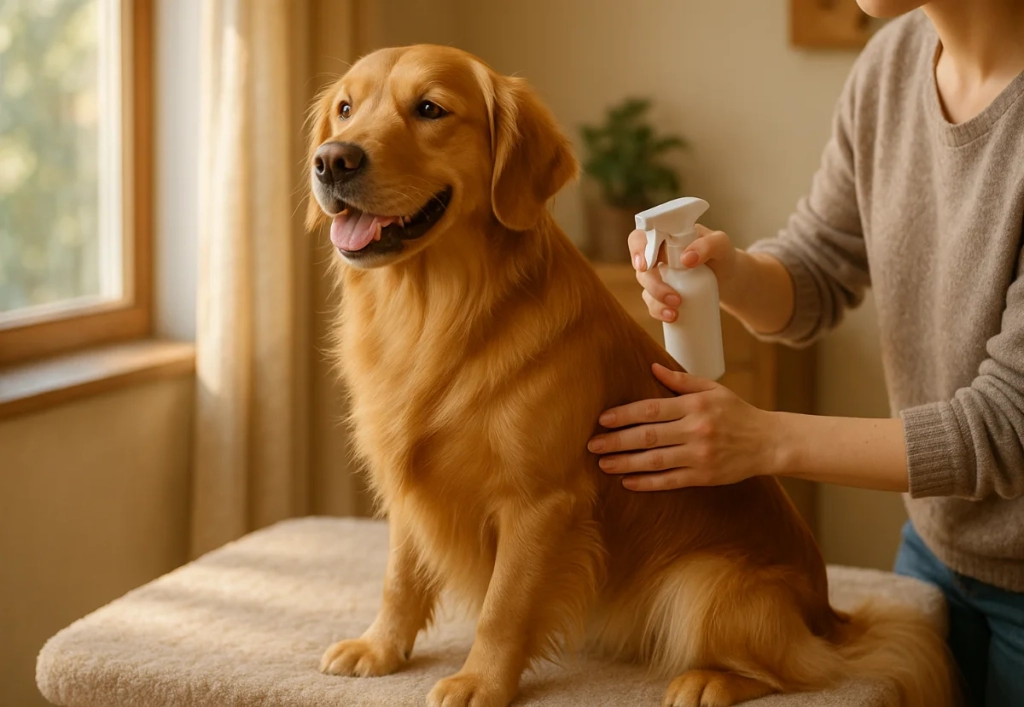
To apply leave-in conditioner on your dog, brush their coat first, lightly spray or apply the conditioner in sections, massage it into the fur, and let it air dry. Doing it correctly helps keep their coat soft, shiny, and healthy. Over the years, I’ve developed a routine with Rumi that makes grooming easy and stress-free for both of us.
Step 1: Brush Before Applying
Brush your dog’s fur first, every time. This removes knots, mats, and loose fur, allowing the conditioner to spread evenly. Rumi’s hair is about shoulder-length, and I use a wide-tooth comb to work out the knots gently. When you brush your hair first, the conditioner doesn’t get stuck in some spots, and the whole process goes more smoothly.
Step 2: Apply the Conditioner
Less is more. Spray or apply a small amount of conditioner, focusing on one section at a time. For Rumi, I use about 3-4 spritzes per section, just enough to coat lightly without soaking her fur. If you’re using a homemade conditioner, adjust the amount based on its thickness to avoid a greasy coat.
Step 3: Massage Gently into the Coat
After applying, massage the conditioner into the coat using your hands. Start at the neck and move toward the tail, using gentle circular motions. Pay extra attention to areas that tend to dry out or tangle, like the ears, belly, and legs. This not only distributes the product but also hydrates the skin underneath.
Step 4: Let the Coat Dry Naturally
While the leave-in conditioner is still on the fur, let your dog’s coat dry naturally. Don’t put it on wet fur, and don’t put too much on either. Starting with a brush ensures an even covering and prevents greasy spots. With a little practice, this process keeps Rumi’s coat smooth, soft, and healthy. It also makes grooming her a relaxing and fun part of our day.
Common Mistakes to Avoid When Using Leave-In Conditioner on Dogs
Leave-in conditioners can transform your dog’s coat, but using them incorrectly can cause problems. Over the years with Rumi, I’ve learned a few key mistakes to avoid so your dog gets the full benefit.
Using Too Much Product
More conditioner does not mean better results. Start with a light mist and add more only if needed. Too much product can attract dirt and make brushing harder.
Using Human Products
Human leave-in conditioners can irritate your dog’s skin. Dogs have a different pH balance than we do, and some ingredients can dry out or irritate their skin. Always use dog-specific products to protect your dog’s skin and coat.
Not Brushing Before Application
Skipping brushing reduces the conditioner’s effectiveness. Tangled fur prevents even distribution, and mats stay in place. I always brush my coat first with a wide-tooth comb. This removes knots and loose hair, ensuring the conditioner reaches every strand.
Ignoring Allergic Reactions
Naturally occurring foods can still cause allergies. Apply the product to a small, less noticeable area first, and wait 24 hours before covering the whole body. Be careful that your dog doesn’t get itchy, swollen, or red.
If you don’t do these things, your dog’s coat will stay soft, shiny, and healthy. There are some things you can do to make leave-in conditioners work better for you and your dog during cleaning.
Leave-in conditioners are a great way to keep your dog’s fur soft, shiny, and healthy, but you need to know how to use them right. A leave-in conditioner made just for dogs can make a big difference in how you groom your dog, whether you’re trying to get rid of tangles, keep their skin from drying out, or add moisture.
Frequently Asked Questions About Leave-In Conditioners For Dogs
1. Can I use leave-in conditioner on puppies?
Yes, leave-in conditioner can be used on puppies, but it’s important to choose a product that’s gentle and formulated for their sensitive skin. Always check the label and do a patch test before applying to their coat.
2. How often should I apply leave-in conditioner to my dog?
For most dogs, applying leave-in conditioner after every bath is sufficient. However, if your dog’s coat tends to get dry or tangled between baths, you can apply it 1-2 times a week to keep their fur soft and manageable.
3. Can leave-in conditioner help with my dog’s shedding?
Leave-in conditioners can reduce shedding by keeping the coat hydrated and healthy. While they won’t stop shedding, they can help with loose fur and reduce the amount of hair that gets tangled.
4. How can I tell if a leave-in conditioner is safe for my dog?
To ensure a leave-in conditioner is safe, look for products specifically designed for pets and free of harsh chemicals like parabens, sulfates, and artificial fragrances. Check the ingredients list and consult your vet if you’re unsure.