When & How Can I Bathe After Flea and Tick Treatment?
Let’s be real for a second… You just put flea or tick treatment on your dog, and now staring at the bathtub feels oddly stressful. It’s frustrating and a little nerve-wracking; you don’t want to wash away protection, but you also hate seeing your pup scratch or smell like trouble. I asked the same question the first time I treated my own dog, Rumi, and I’ve guided dozens of worried owners at Ozark Dog Farm through this exact dilemma. The problem is simple: bathe too soon and the meds can be less effective; wait too long and your dog stays uncomfortable.
In this short guide, I’ll give you clear timelines, common mistakes to avoid, and easy bathing steps so you can bathe confidently without undoing treatment.
Understanding Flea and Tick Treatments
Bathing too soon can absolutely mess with your dog’s flea or tick treatment. But it really depends on what kind of product you’re using. And that’s where most owners get confused.
Let’s break it down.
1. Spot-on or topical solutions
These are the drops you put on the skin, usually between the shoulders. They spread through your dog’s natural oils. If you bathe too early, you risk washing those oils away. And poof—there goes the protection.
2. Oral medications
These are the chewables or flavoured pills. They work from the inside out, circulating through your dog’s blood. A bath won’t ruin them, but vets usually say wait a day just to let the medicine settle in.
3. Flea and tick collars
Collars release protection slowly, over weeks or even months. They’re convenient, but not invincible. Too many baths or swims can weaken them, especially if the collar isn’t waterproof.
4. Medicated shampoos
These kill fleas and ticks on contact, but they’re a quick fix, not long-term protection. Think of them more like a reset button than a full plan.
So yes, timing matters. I learned that the hard way at the farm when Rumi rolled in mud the day after her treatment. I thought a quick bath was harmless. Turns out, it stripped her protection, and I had to reapply. Not fun for me, and definitely not fun for her.
How Long Should You Wait to Bathe Your Dog?
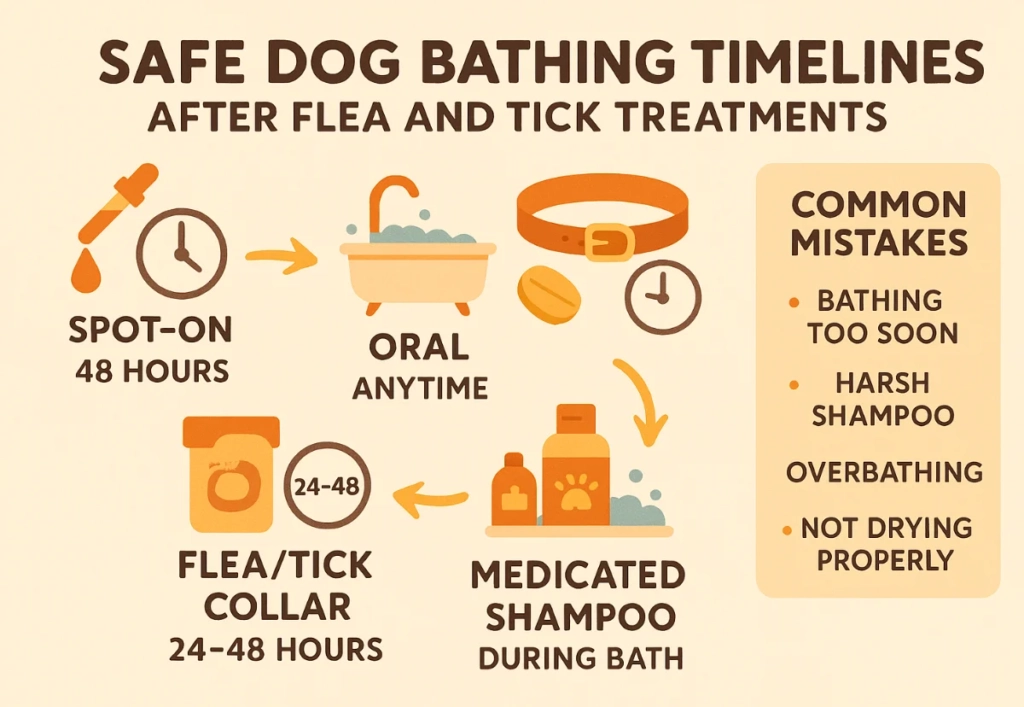
Most dogs need to wait about 48 hours after a topical flea or tick treatment before hitting the bath. With oral meds, baths don’t matter. And if your dog’s wearing a collar, 24 to 48 hours is usually enough before getting them wet.
Here’s the breakdown in plain English:
| Treatment Type | When to Bathe After Use | Why It Matters |
| Spot-on (topical) | 48 hours | Needs time to absorb into natural skin oils |
| Oral medications | Anytime | Works from the inside, water doesn’t affect it |
| Flea/tick collar | 24–48 hours | Gives the active ingredients time to spread |
| Medicated shampoo | During bath | Kills fleas and ticks instantly, but no long-term protection |
Now, I’ll be honest with you. It’s tempting to rush. Your dog rolls in mud, smells like a swamp, or maybe just gives you that “please, bath me” look. But the wait really is worth it. I’ve seen dogs lose protection overnight because their families didn’t wait. Once, a sweet boarder pup came in the day after treatment, his people had bathed him that same night, and we had to restart everything. Even my own Rumi has tested my patience more than once, especially when she trots in with muddy paws right after I’ve treated her.
Step-by-Step Guide: Bathing Your Dog Safely After Treatment
You can absolutely bathe your dog after flea or tick treatment, but only if you do it the right way. Timing, products, and technique all matter. Get it wrong and you could wash away protection. Get it right and your pup stays both clean and protected. Here’s exactly how I do it, step by step.
Quick Pre-Bath Checklist
- Read the product label first.
- Confirm the wait time (spot-on: about 48 hours, collar: 24–48 hours, oral meds: usually anytime).
- Gather what you’ll need: a towel, gentle vet-approved shampoo, a brush, and a non-slip mat.
Step 1 – Check the Instructions First
Always, always read the label or ask your vet before you grab the hose. Those tiny words explain how long the medicine needs to bond with skin or coat oils. I once re-read a collar insert after nearly dunking a pup at the Farm. Good thing I did, it wasn’t waterproof. That pause saved me a headache.
Step 2 – Wait the Recommended Time
For spot-on treatments, it’s usually 48 hours. Collars need a day or two to spread protection. Oral meds? They’re internal, so baths don’t affect them much. I know the wait feels endless when your dog is muddy, but that patience is the difference between protection and starting over.
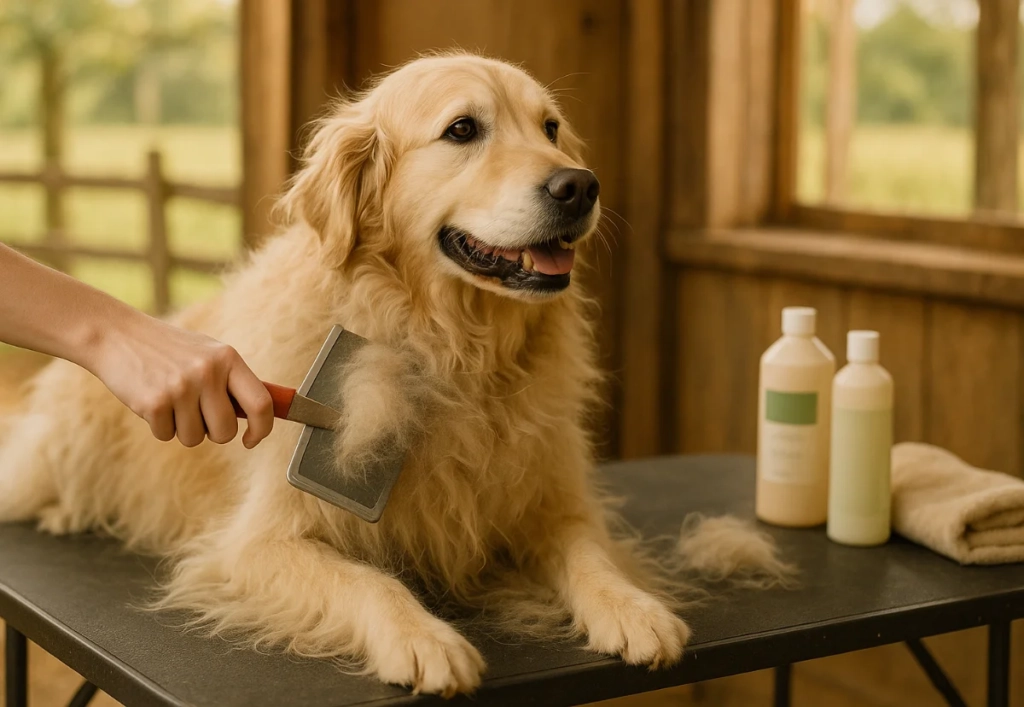
Step 3 – Brush Before the Bath
A quick brush removes tangles, loose hair, and dirt so the shampoo can actually work. I skipped this sometimes with Rumi, my long-haired troublemaker. The bath makes her tangles worse, and I spend forever trying to fix the mess.
Step 4 – Use Lukewarm Water Only
The water should feel warm on your wrist, never hot or freezing. Hot water strips oils and irritates skin. Cold water just stresses them out. Keep the stream gentle and point it downward, especially around the spot where the topical was applied.
Step 5 – Pick a Mild or Vet-Approved Shampoo
Never grab your own shampoo. Dogs need products made for their skin. Human shampoos can cause irritation and dryness. At the farm, we keep hypoallergenic shampoo for sensitive pups, and honestly, Rumi prefers it too.
Step 6 – Apply Shampoo Carefully
Start at the neck and move back. Avoid scrubbing the exact spot where you applied a topical treatment. Less is more here. A little lather cleans just fine, and piling on suds only makes rinsing harder.
Step 7 – Rinse Until the Water Runs Clear
Take your time. Soap residue is itchy, irritating, and a magnet for dirt. Once, I rushed Rumi’s rinse, and she scratched half the night. Never again. Now I always give an extra minute to make sure she’s fully rinsed.
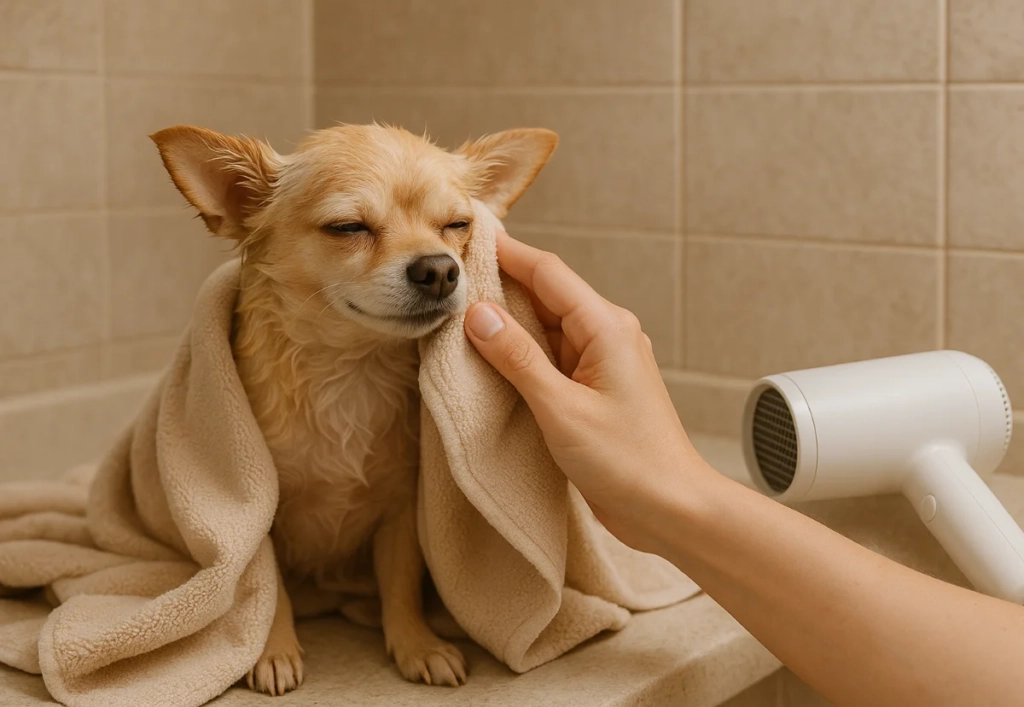
Step 8 – Dry Thoroughly
Blot with a towel instead of rubbing. If your dog’s okay with it, use a blow dryer on the lowest heat, moving it constantly. Don’t forget those tricky spots, armpits, belly, and folds. Damp fur can lead to irritation and hotspots.
Step 9 – Check the Skin Afterwards
Look for redness, swelling, hair loss, or excessive scratching in the days after. If something looks off, call your vet. And if you used a medicated shampoo, double-check if you need to reapply flea or tick prevention.
Step 10 – Final Reassurance
Bathing after treatment doesn’t have to be stressful. Go slow, protect the treatment spot, and keep things calm. Your dog will pick up on your confidence. At Ozark Dog Farm, even Rumi, mud-loving, grass-rolling, chaos machine, prances out of the tub clean, safe, and looking way too pleased with herself.
Mistakes to Avoid When Bathing After Flea and Tick Treatment
The truth? Most mistakes happen because we love our dogs so much that we want to help right away. I’ve been there with Rumi, rushing into a bath or grabbing the wrong product. But a few simple missteps can undo the protection you just gave your pup. Let’s go through the big ones so you don’t have to learn the hard way.
Bathing Too Soon After Spot-On Treatments
Topical products need about 48 hours to spread through the skin’s oils. Wash your dog before then, and you’ll rinse away the medication.
Why it’s a mistake: The treatment won’t work, and your dog is left exposed.
From my Farm memory, a few weeks ago, a boarder went home freshly treated, but his family bathed him that same night. He was crawling with fleas a week later. We had to start over from scratch.
Using Human Shampoo or Dish Soap
It might smell nice or seem like a quick fix, but human shampoos and dish soaps are too harsh. They strip oils, irritate skin, and mess with the treatment’s ability to spread.
Why it’s a mistake: Dry, itchy skin and reduced protection.
I once almost lathered rumi in lavender dish soap after a supply mix-up. Thankfully, I stopped myself in time. Lesson learned, “dog shampoo only”
Overbathing Your Dog
Bathing too often seems harmless, but it removes the natural oils your dog’s skin needs. Those oils are what help topical treatments do their job. Most pups only need a bath every 4–6 weeks.
Why it’s a mistake: Dry skin, weaker flea protection, and one uncomfortable pup.
Tip: Spot clean with a damp cloth if your dog loves rolling in mud like Rumi does. It saves the skin and the treatment.
Not Drying Properly
Damp fur might not seem like a big deal, but moisture trapped in thick coats or folds can cause infections. Hotspots, rashes, and yeast love wet skin.
Why it’s a mistake: Your dog stays itchy and uncomfortable, and the skin can get worse fast.
One of our hounds developed a nasty rash because his belly stayed damp after a rushed towel dry. Now I always check underarms, folds, and bellies.
Avoiding these slip-ups means your dog’s flea and tick protection works exactly as it should. Bath time becomes a safe, simple routine instead of a stressful do-over.
FAQs: Bathing Your Dog and Flea & Tick Treatments
Here are quick, voice-search-friendly answers to the most common questions dog owners ask:
Can I bathe my dog before flea and tick treatment?
Yes. In fact, bathing your dog 24–48 hours before applying a topical treatment can help. Clean skin and coat allow the medication to spread evenly through natural oils. Just avoid bathing right before application; your dog needs some skin oils intact for absorption.
What shampoo should I use after treatment?
Always use a mild, dog-specific shampoo or one recommended by your veterinarian. Human shampoos, dish soaps, or anything too harsh can strip natural oils and reduce the effectiveness of topical flea and tick products. For sensitive skin, hypoallergenic or oatmeal-based formulas are safe choices.
Will swimming affect flea/tick treatment?
It depends on the product.
- Spot-on/topicals: Frequent swimming (especially in chlorinated or salty water) can reduce effectiveness if done within the first 48 hours.
- Collars: Some are waterproof, others aren’t—check the label.
- Oral meds: Swimming has no effect since the treatment works internally.
How often should I bathe a dog on flea meds?
Most dogs only need a bath every 4–6 weeks. Overbathing can strip skin oils that help topical treatments spread. If your pup gets muddy or smelly in between, use a damp cloth or water-only rinse. Oral medications aren’t affected by bathing, but healthy skin still benefits from moderate bath frequency.