How to Keep Your Dog’s Coat Shiny and Healthy
You’re probably here because you’ve noticed your dog’s coat doesn’t look as shiny or healthy as it should, and you want to fix it. Maybe the fur feels a little dull, rough, or sheds more than usual, and it’s leaving you worried. I’ve been there too, when my own pup, Rumi, lost her glossy coat, it broke my heart to see her looking less than her best. The good news? A shiny, healthy coat isn’t just about appearance; it’s a sign your dog is thriving inside and out.
In this guide, I’ll walk you through simple, proven steps to restore your dog’s coat and keep it glowing with health, so you can feel confident you’re giving your furry friend the best care possible.
Why Your Dog’s Coat Health Matters
Because it’s one of the clearest signs of their overall health, it’s not just about soft fur you love to pet. A shiny coat usually means your dog is eating well, staying active, and getting the care they need. A dull or brittle coat, on the other hand, can be your first clue that something isn’t quite right. I always remind myself of this with Rumi, my golden retriever. Her coat tells me things she can’t put into words.
Protection Against Skin Infections
A healthy coat is like armour. It shields your pup’s skin from bacteria, parasites, and even allergens. But when that coat gets patchy, greasy, or dirty, it leaves little openings for trouble. One muddy week, Rumi, without a proper bath she started scratching nonstop. The culprit? Moisture trapped in her coat irritated her skin. Luckily, a gentle bath and consistent brushing fixed it before it got worse.
Comfort and Temperature Regulation
Think of your dog’s coat as built-in climate control. When it’s hot, a well-kept coat helps keep them cooler by reflecting heat. When it’s cold, it acts like a warm blanket. But here’s the thing, if fur is tangled or neglected, that natural system stops working the way it should. Your pup could end up too hot in the summer or shivering in the winter. That’s why a little upkeep goes a long way.
A Mirror of Nutrition and Internal Health
This part is huge. Your dog’s coat literally mirrors what’s going on inside. If they’re missing key nutrients, like omega-3s, proteins, or vitamins, you’ll often see it in their fur first. Dry. Flaky. Dull. When I switched Rumi to a higher-quality kibble with salmon oil, I couldn’t believe the difference. Within weeks, her coat went from flat to glossy, like she’d just come back from a spa day.
Common Reasons for a Dull or Unhealthy Dog Coat
Even when you’re giving your dog all the love in the world, their coat can sometimes lose its shine. And that’s frustrating, right? The truth is, there’s usually a clear reason behind it. Once you understand the root cause, it becomes much easier to bring back that soft, healthy glow.
Poor Nutrition
Food fuels everything. If your pup isn’t getting enough protein, their fur can grow weak and brittle. Without omega-3s, you’ll notice less shine and maybe even itchy, inflamed skin. And vitamins like A, E, and B-complex? Those are like the behind-the-scenes workers keeping skin smooth and strong. Miss out on them, and the coat will show it.
Signs nutrition might be the problem:
- Dull fur with no shine
- Slow hair regrowth after shedding
- Persistent dandruff, even with grooming
Lack of Grooming
This one’s easy to overlook. Regular brushing and the occasional bath aren’t just about keeping your dog looking pretty. They spread natural oils, remove dirt, and keep tangles at bay. Skip grooming for too long, and the fur gets rough, heavy, and matted. I learned this firsthand when I skipped brushing Rumi for a week. Her undercoat knotted so badly it took nearly an hour to carefully work through the tangles.
Signs grooming is the issue:
- Mats or knots in thicker areas
- Greasy or oily patches of fur
- More fur around the house than usual
Skin Conditions or Parasites
Sometimes the problem runs deeper than food or brushing. Fleas, mites, allergies, or skin conditions like dermatitis can wreak havoc on your dog’s coat. Even a mild infestation can lead to constant scratching, which only makes the fur thinner and weaker.
Signs skin or parasites are involved:
- Nonstop scratching or chewing at fur
- Bald spots or thinning hair
- Red, flaky skin or scabs
Stress and Environment
Your dog’s surroundings and emotions matter more than you might think. Dry winter air, harsh cleaning products, or even big life changes can impact their coat. Just like people lose hair during stressful times, dogs can shed or develop brittle fur when they’re anxious. At the farm, I’ve noticed dogs moving into new homes often shed heavily until they settle in and feel safe.
Signs stress or environment might be the cause:
- Sudden heavy shedding
- Dry, brittle coat despite a good diet
- Itchy skin without signs of parasites
Nutrition Tips for a Shiny Coat
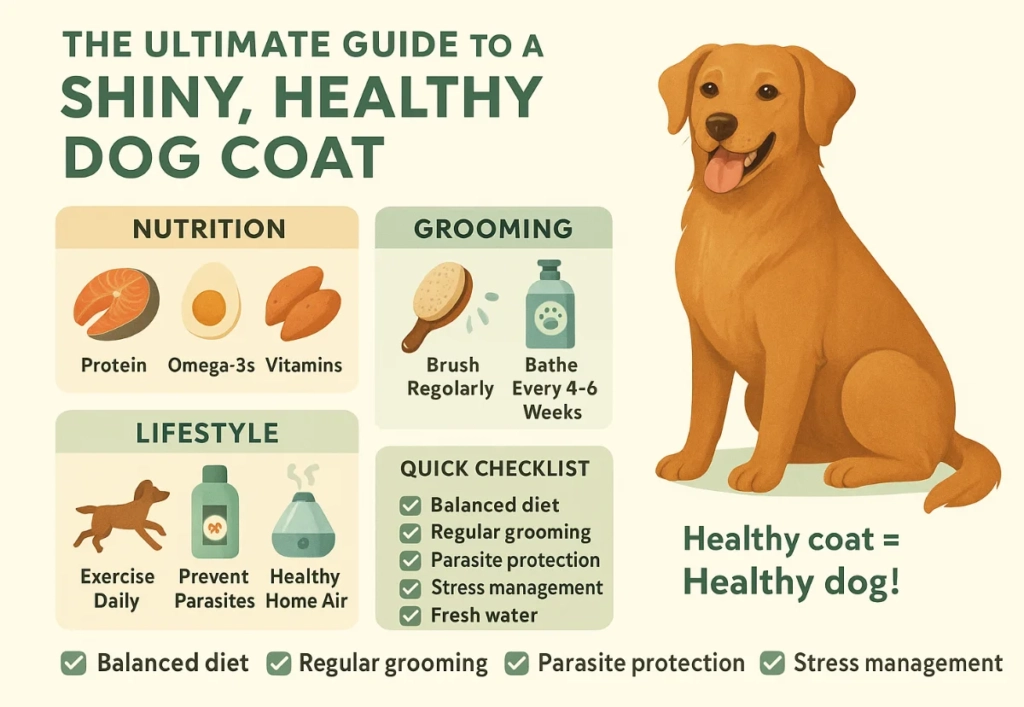
What your dog eats shows up in their fur. It’s that simple. Just like our skin and hair respond to what we put on our plate, your pup’s coat reflects what’s in their bowl. The right food can turn dull, brittle fur into something soft, glossy, and healthy. And the best part? You’ll usually notice changes within weeks.
Best Foods for Coat Health
You don’t need anything fancy, just the right ingredients. Adding coat-friendly foods to your dog’s meals can make a huge difference:
- Salmon – loaded with omega-3s that calm inflammation and boost natural shine
- Eggs – a protein powerhouse with biotin for stronger, healthier fur
- Coconut oil – supports skin hydration and helps reduce flakiness (in moderation)
- Sweet potatoes – packed with beta-carotene and vitamins that feed the skin and hair follicles
Supplements to Consider
Sometimes food alone doesn’t cut it. Maybe your dog is a picky eater, or allergies get in the way. That’s when supplements can help. However, always consult your veterinarian before starting any new treatment.
- Omega-3 fatty acids – for softer coats and less shedding
- Biotin – helps with fur growth and reduces dryness
- Fish oil capsules – an easy daily boost for hydration and shine
Hydration and Coat Health
This one’s so simple it’s often overlooked. Water. Fresh, clean water is one of the easiest ways to keep your dog’s coat healthy. Dehydration dries out fur and makes skin itchy. Always keep that bowl filled, especially in the summer or after long play sessions. A well-hydrated pup almost always has a happier, healthier coat.
Grooming Practices for a Healthy Coat
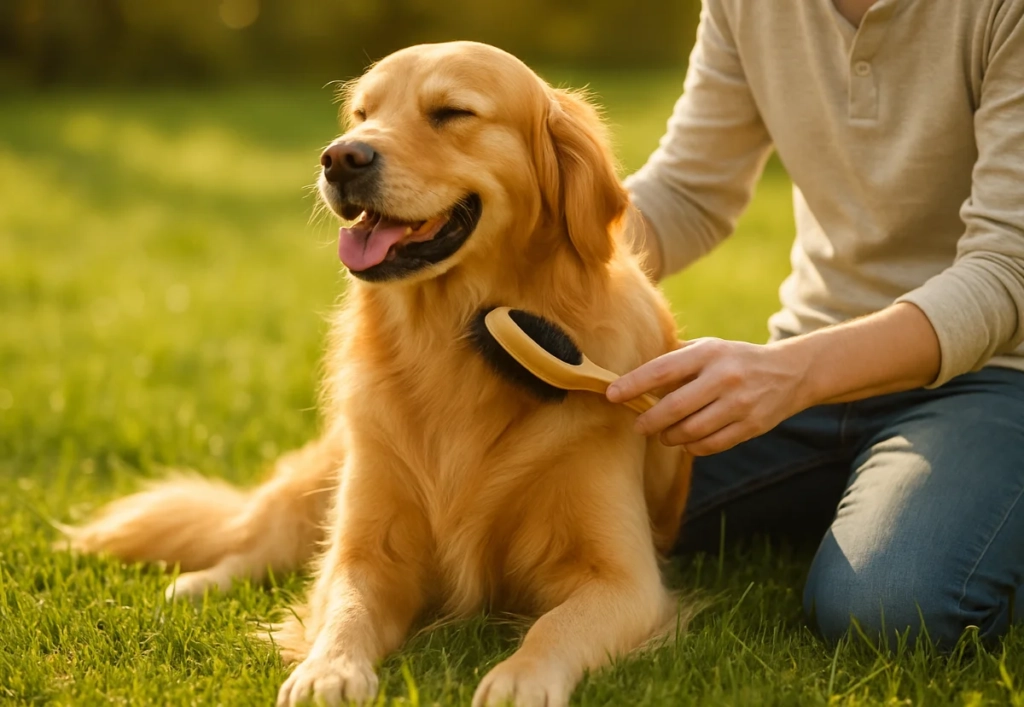
Good food builds the foundation, but grooming is what keeps your dog’s coat looking its best day after day. The right habits don’t just make fur look pretty; they prevent matting, cut down on shedding, and keep your pup feeling comfortable. Plus, grooming time can turn into some of the best bonding moments you’ll share.
Regular Brushing
Brushing is one of the simplest, most effective ways to care for your dog’s coat. How often depends on their fur:
- Short coats – once or twice a week usually does the trick
- Long coats – daily brushing keeps mats and tangles away
- Curly coats – every other day helps spread natural oils evenly
And it’s not just about looks. Brushing stimulates the skin, boosts circulation, and relaxes your dog. At the farm, I’ve seen even the rowdiest pups calm down once brushing becomes part of their routine. It’s like doggy meditation.
Bathing Tips
Baths are important, but too many can backfire. Overbathing strips away natural oils, leaving skin dry and itchy. A safe rule is every 4–6 weeks, though active dogs like Rumi sometimes need an extra rinse after rolling in the mud.
When choosing a shampoo, look for:
- Hypoallergenic options for sensitive skin
- Anti-shedding formulas to help during seasonal changes
- Oatmeal-based shampoos to soothe itchy pups
I’ll never forget the night I rushed through Rumi’s rinse after a long day. I thought she was clean, but leftover soap made her scratch like crazy. Now, I always double-check that every bit of suds is gone before towelling her off.
Professional Grooming
Sometimes it’s easier and healthier to let the pros step in. Groomers know how to handle tricky coats, breed-specific trims, and heavy shedding sessions. They can also catch skin issues you might miss at home. It’s worth considering if:
- Your dog’s coat mats too easily
- Their breed needs regular trims
- You feel overwhelmed by shedding
Dog Grooming Essentials Checklist
✅ Slicker brush or de-shedding tool
✅ Dog-safe shampoo and conditioner
✅ Towels or a pet-safe blow dryer
✅ Nail clippers or grinder
✅ Ear-cleaning solution
✅ Detangling spray for long-haired breeds
Lifestyle Habits That Improve Coat Health
Food and grooming are big pieces of the puzzle, but they’re not the whole picture. Your dog’s daily lifestyle matters just as much. Stress, parasites, even the air in your living room, can mean the difference between a dull coat and one that shines.
Exercise and Mental Health
Movement is magic. Regular exercise gets blood flowing, which helps carry nutrients right where they need to go, the skin and coat. Just as important, activity reduces stress. And stress often shows up as shedding, itching, or even bald spots.
I’ve seen it countless times at Ozark Dog Farm. Nervous rescues with patchy coats grow fuller, shinier fur once they settle into a steady rhythm of walks, play, and training.
Parasite Prevention
Fleas, ticks, mites, tiny pests, big problems. They irritate the skin, cause nonstop scratching, and can even lead to infections that thin the coat. Staying ahead with vet-approved preventatives is the easiest way to protect your dog. It keeps them comfortable and keeps their coat looking healthy.
Home Environment
The space your dog lives in matters more than most people realise. Small changes inside your home can either support their skin or make things worse:
- Humidity – Dry winter air often causes flaky skin and brittle fur
- Chemicals – Harsh floor cleaners or sprays can irritate skin if your pup walks or lies on them
- Bedding – Clean, soft bedding reduces matting and helps fur stay shiny
Conclusion
A shiny coat is so much more than a pretty look. It’s one of the clearest signs your dog is healthy, happy, and thriving. Nutrition, grooming, exercise, and even the environment at home, all of it works together to keep that fur soft and glowing.
So start simple. Maybe it’s switching to a food with more omega-3s. Maybe it’s making brushing a daily bonding ritual. Or maybe it’s just adding a little humidifier to the room where your pup sleeps. Whatever you choose, you’ll notice the difference, not just in their coat, but in their overall happiness.
Because your dog deserves to feel as good as they look. And with a little extra care, that glossy, healthy fur will be your proof.