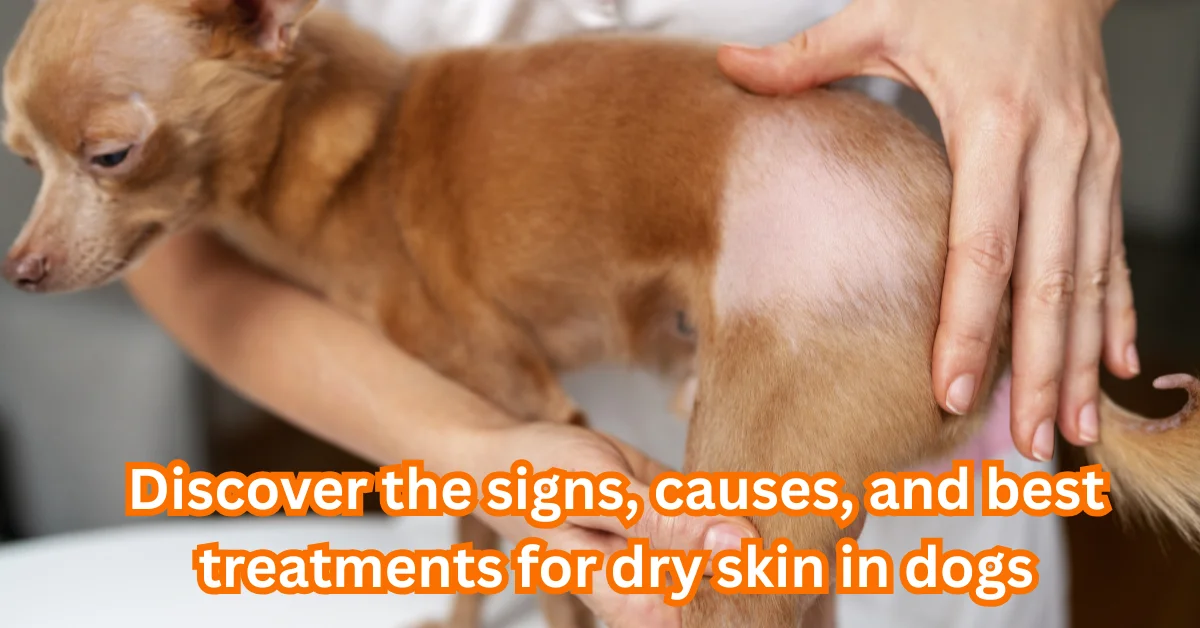
Dry Skin in Dogs Treatment: Symptoms & Causes
Does your dog scratch, bite, or rub against the couch all the time as if it’s the only way to feel better? You are not the only one who worries about your dog’s dry skin. It’s one of the things pet owners worry about most. The subject came up almost every week when I worked at Ozark Dog Farm. I really get it, too. Our dog Rumi had a rough patch of flaky, itchy skin one cold winter. She scratched so much that neither of us got a good night’s sleep.
That experience taught me two things: first, dry skin in dogs is awful, and second, you can totally take care of it once you know “why” it happens.
Now I’m going to walk you through everything step by step, including how to spot the early signs, the main causes of dry skin in dogs, treatments that really work, and simple ways to keep your dog’s coat healthy and smooth all year.
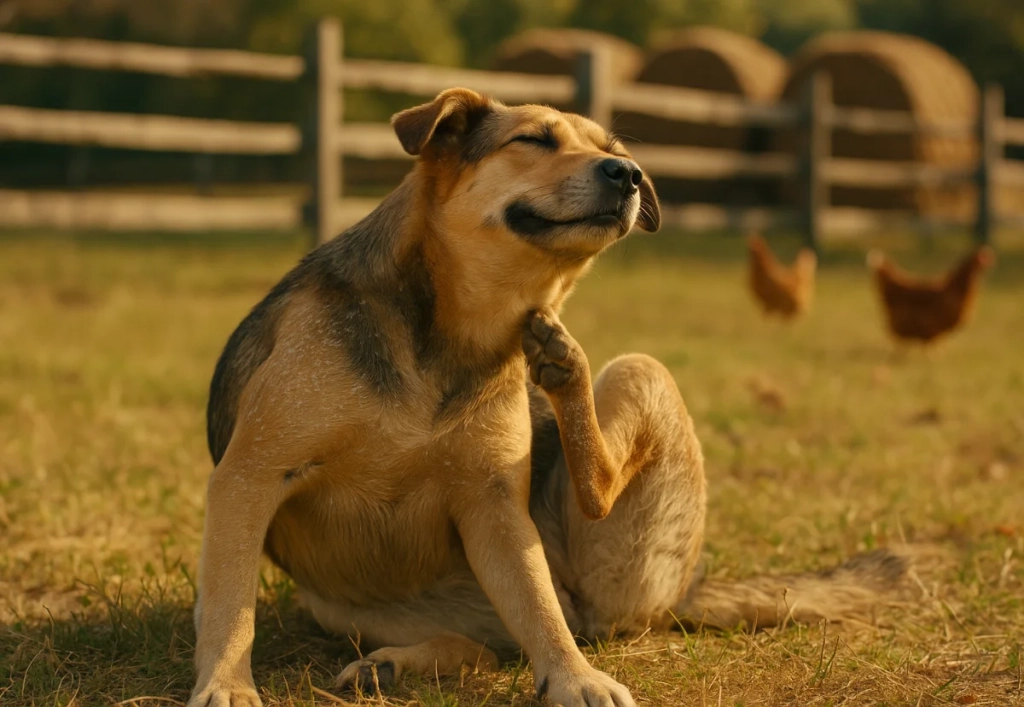
What is Dry Skin in Dogs?
A dog’s skin gets dry when it loses its normal balance between wetness and dryness. This might make your skin flake, itch, or become irritated.
It can happen to any dog. People sometimes do it because they don’t like the cold winter air or the dry heat inside. Bugs, allergies, or problems with your food are among the more important things it can mean.
It looks like there are some flakes of white hair on your head. Your dog may scratch, lick, or chew more than usual. It could also mean that something is wrong if your skin is red, bald, or smells funny.
It hurts and is bad for your dog’s health when their skin is dry. It can lead to open wounds, infections, and dull or thin hair if you don’t fix it. Nobody wants their dog to be sad or antsy all the time because it is itchy.
We can handle most cases, which is good news. If you give your dog light baths, feed them a healthy diet, and listen to the vet, their skin will heal and stay healthy. They will remain happy, shiny, and itchy as long as you take care of them.
Symptoms of Dry Skin in Dogs
Dry skin in dogs shows up as flakes, itching, or irritation that makes your pup uncomfortable. You can keep your dog from scratching for weeks at a time if you notice these signs early on. This will help you avoid bigger problems, such as infections.
An owner will often notice that the hair is dirty first. Small, flaky white patches may appear on your dog’s back or shoulders if they have a dark coat. One winter, Rumi, my dog, had dry skin. I thought the spots were on her bed at first, but then I saw they were on her fur. That little thing helped me quickly figure out what was wrong, before the itching got worse.
An itchy skin is another common sign. More often, dogs may lick and chew on their paws, sides, or bellies. Over time, their fur can get dull, rough, or patchy. The skin can turn red and hurt. Some people get a musty smell when they scratch and break the skin. This is usually a sign of an infection.
| Symptom | What It Looks Like | Notes |
| Dandruff | Small white flakes on the coat | I first saw Rumi’s flakes on her blanket before her fur. |
| Itching | Scratching, licking, or chewing at skin | Dogs may scratch so much that they lose sleep. |
| Coat changes | Fur looks dull, brittle, or patchy | A healthy coat should look shiny and soft. |
| Redness | Skin looks sore or inflamed | It can get worse if the skin breaks. |
| Odor | Musty smell on the skin or coat | Often means an infection has started. |
Sometimes it can be hard to tell if your dog has dry skin or an allergy. Dry skin usually shows up when it is cold or when it’s dry outside, and shampoos that moisturize or omega fatty acid vitamins can help. Some allergies have symptoms that look a lot like those of other allergies, like runny eyes, ear infections, or constant paw licking. Allergies, on the other hand, can occur at any time of year or after exposure to certain foods or places.
When you understand these differences, it’s easier to care for your dog and know when to see a vet and when to handle something simple at home.
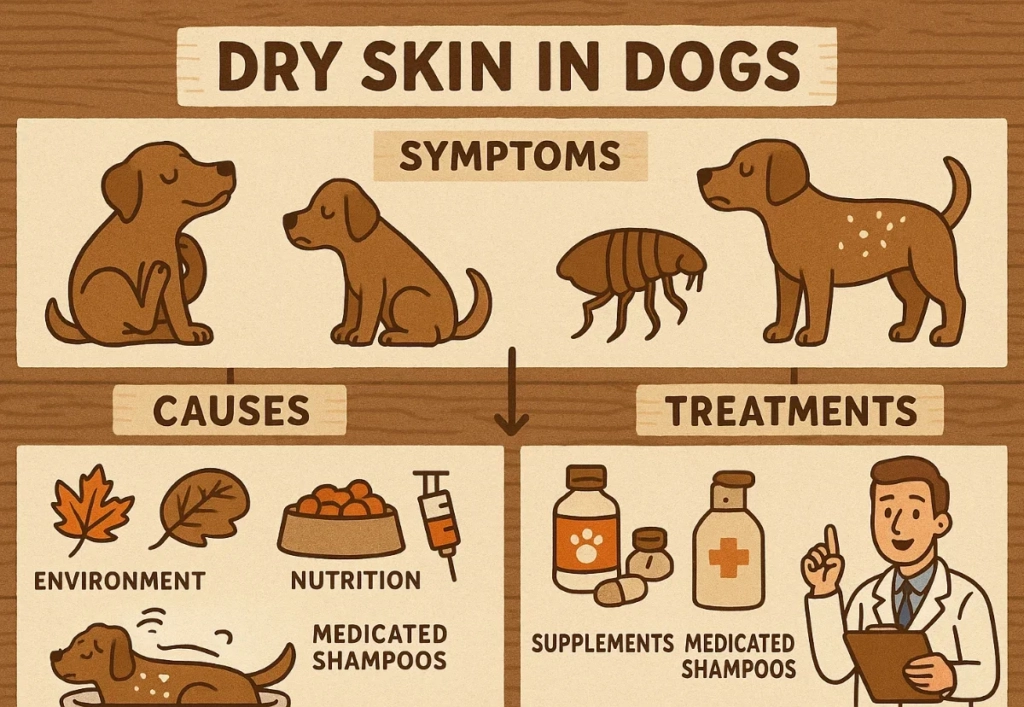
Causes of Dry Skin in Dogs
Dry skin in dogs usually has an underlying cause. It can come from the environment, allergies, parasites, diet, or even medical conditions. Identifying the cause of the itching is the first step to helping your dog feel better.
Environmental Factors
Many things around you can hurt your skin. The cold winter air makes your skin dry. When it gets warmer inside, the air drops, which makes it drier. Also, taking too many baths is bad because they remove the coat’s natural oils. In January, this is what my dog Rumi and I saw. She played in the mud on the farm, and I bathed her too much. After a week, her shiny coat became flaky. When I switched to fewer baths and a gentle moisturising shampoo, her coat improved quickly.
Allergies
It’s also common to have dry skin due to allergies. For example, the proteins in chicken, beef, and dairy can worsen food responses. At certain times of the year, people who are allergic to pollen, dust mites, or mold often have flare-ups. It’s really annoying to be allergic to flea bites.. Even a single bite can cause intense itching and red skin in sensitive dogs.
Parasites and Infections
Microscopic pests can create serious skin problems. Mites and mange often cause scabs, hair loss, and nonstop scratching. Yeast infections thrive in warm, damp areas, such as the ears or paws, and often cause redness and odour. Bacterial infections may develop if the skin is broken from constant scratching, leading to sore patches and discomfort.
Nutritional Deficiencies
What a coat eats is very important to its health. When dogs don’t get enough omega-3 and omega-6 fatty acids, their coats often get flaky and dry. Not getting enough of certain minerals and vitamins, such as zinc and vitamin E, can also make the skin layer weaker. Both the skin and the coat can benefit from a well-balanced diet full of the right nutrients.
Underlying Health Conditions
Dry skin can sometimes be a sign of a larger health problem. A slow metabolism can cause hair to become thin and dry if you have hypothyroidism. It is because they have too much cortisol in their bodies that their skin is weak and prone to infections. A vet is the only person who can properly check for and treat these diseases.
If your dog’s skin problems don’t go away after you change its food and surroundings, you should take it to the vet. Having dry skin that won’t go away could be a sign of something more serious. It’s important to get help right away.
Dry Skin in Dogs Treatment
Once you know what is causing your dog’s dry skin, there are many ways to help. Mild cases can often improve at home. More persistent issues may need dietary changes, supplements, or veterinary care.
At-Home Remedies
Gentle, natural treatments can soothe irritation and restore moisture. Oatmeal baths calm itchy skin. An easy and effective way to soak is to grind up plain oats and mix them with warm water. Putting coconut oil on the area will keep the skin moist and reduce discomfort. A humidifier helps keep winter clothes from getting flaky by adding moisture to the air.
I learned this from Rumi. After I quickly rinsed her with oatmeal, she scratched all night. Because I wanted to make sure the oats were fully mixed, I let the water cool for five minutes longer the second time. She slept well and her skin felt better in the morning.
Dietary Changes and Supplements
Healthy skin starts from the inside out. Fish oil contains omega-3 fatty acids, which are good for your hair. A well-balanced diet that meets all essential needs, like zinc and vitamins A and E, can keep you from getting dry skin. Always talk to your vet before giving your pet any new vitamins.
Medications
Sometimes at-home care is not enough. Antihistamines can lessen allergic reactions and itching. Medicated shampoos with antifungal or soothing ingredients, such as aloe vera, can help reduce swelling. A vet may prescribe antibiotics, antifungals, or hormone treatments for infections or deeper health problems.
Professional Veterinary Care
There may be tests for allergies, bugs, or thyroid issues that a vet can do. They can make a care plan just for your dog. Professionals are the only ones who can get you some medicated baths and topical treatments.
Once a vet found the real cause, dogs with dry skin that wouldn’t go away got better in just a few weeks here at Ozark Dog Farm. Most of the time, owners couldn’t find it on their own. Help and advice given early on can make all the difference.
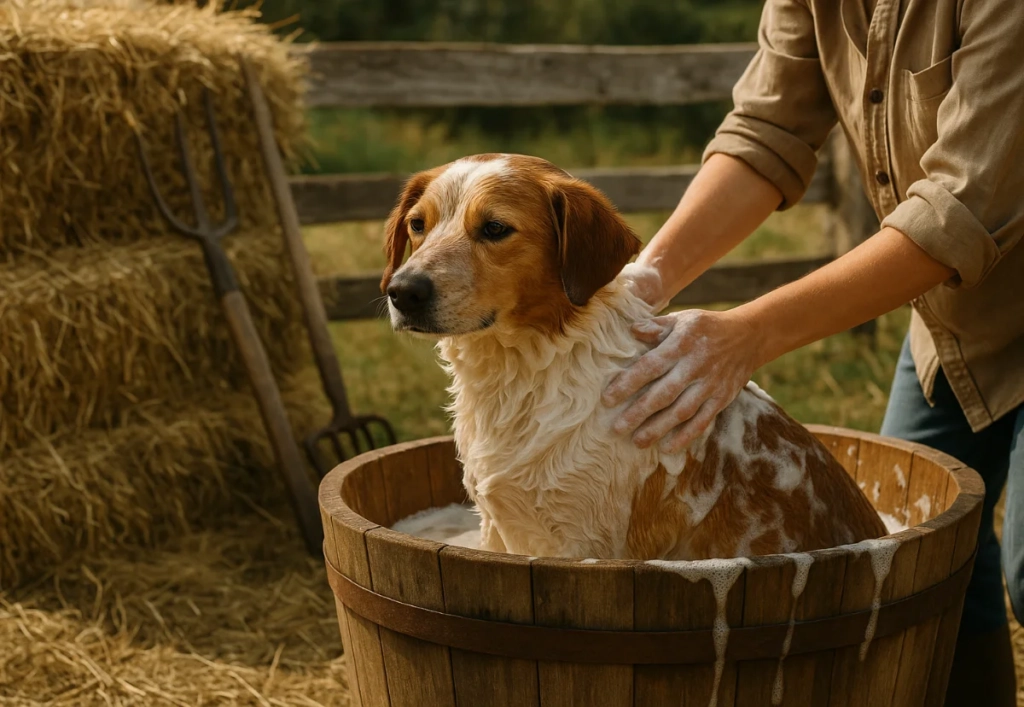
Prevention Tips for Dry Skin in Dogs
Preventing dry skin is always better than treating it. Simple habits can keep your dog’s coat soft, shiny, and itch-free all year.
Proper Grooming Habits – Regular brushing removes loose fur, spreads natural oils, and prevents matting. Bathing should be limited to once every four to six weeks unless your dog gets especially dirty. Overbathing strips away natural oils and can dry out the skin.
On busy days, I sometimes skipped brushing. After a week, rumi’s coat looked dull and she started scratching. A quick ten-minute brush restored her shine and eased her itching. Checking your dog’s skin during grooming is also important. Watch for redness, flakes, or scabs before they become bigger problems.
Seasonal Care for Dogs – Each season brings its own challenges for skin health. In winter, use a humidifier indoors and avoid hot baths, which dry out the skin. During summer, rinse your dog after swimming to remove chlorine or salt that can irritate the coat. In spring and fall, be alert for seasonal allergies and keep bedding clean to reduce pollen exposure.
Choosing the Right Shampoo and Conditioner – Always use products made just for dogs. Human goods can dry out your dog’s skin and alter its pH. With oatmeal, aloe, or coconut in their moisturizers, you can help soothe and hydrate your face. Conditioners made just for dogs keep the hair fresh and are especially good for breeds whose coats tend to flake.
Balanced Diet and Hydration – Healthy skin starts from the inside. Feed a high-quality diet that includes omega-3 and omega-6 fatty acids. Supplements like fish oil or flaxseed oil can help if your dog’s diet is lacking in these nutrients. Fresh water is essential for keeping the skin resilient, especially during hot months.
By building these habits into your routine, you can significantly reduce the chances of your dog developing dry, itchy skin. Prevention is easier than treatment and keeps your dog happier, healthier, and more comfortable year-round.
Last Word
Dry skin on dogs might not seem like a big deal, but it can quickly make your dog feel bad. Keep an eye out for dandruff, scratching, or flaky hair. Changes in the weather, allergies, bugs, and health problems are some of the things that can cause it. Oatmeal baths, omega-3 supplements, and professional medical care are all ways to help. If home remedies don’t work, a vet can identify the underlying problems and provide your pet with long-lasting comfort. I learned from Rumi that being consistent is important. A healthy diet, regular grooming, and seasonal care can help stop flare-ups. It’s worth it because every day your dog will be happy and relaxed, and its tail will wag more.
FAQs About Dry Skin in Dogs Treatment
What causes dry skin on dogs’ ears?
Dry skin on the ears is often linked to environmental factors like cold weather or low humidity, but it can also signal allergies, mites, or yeast infections. If your dog is shaking their head or scratching excessively, a vet check is best to rule out ear infections.
Can dry skin in dogs be a sign of something serious?
Yes. While many cases are caused by mild issues like seasonal dryness, persistent dry skin may indicate hypothyroidism, Cushing’s disease, or severe allergies. If you see redness, hair loss, or scabs, don’t wait; schedule a vet appointment.
How long does it take to treat dry skin in dogs?
Mild cases improve within 1–2 weeks with at-home care like moisturising shampoos and omega-3 supplements. More complex cases, such as those linked to allergies or parasites, may take several weeks or longer under veterinary treatment.
What human remedies are safe for dogs?
Some natural options, like plain coconut oil or colloidal oatmeal baths, can safely soothe your dog’s dry skin. However, human lotions or medicated creams should never be used, as many contain ingredients toxic to dogs. Always consult your vet before trying home remedies.