Dog Shampoo for Pyoderma: A Complete Owner’s Guide & Expert’s Tips
Would you believe that the shampoo you use at home could help ease your dog’s constant itching and pain, rather than taking him to the vet?
In 2017, I took care of a sweet golden retriever named Max on a dog farm in the Ozarks. I still remember him. His happy personality slowly faded as his painful skin disease, pyoderma, took over. The way I saw him struggle broke my heart, and I realised how much a simple bath could help a dog.
You’re not the only one whose dog has skin that is hot, itchy, or flaky. More importantly, there is help for you. This chapter will teach you about pyoderma, how to spot it, and how the right shampoo can really help.
What is the Best Treatment for Pyoderma in Dogs?
The best treatment for pyoderma in dogs is a combination of medicated shampoos, antibiotics, and veterinary guidance. This three-part approach helps reduce infection, soothe the skin, and prevent future flare-ups.
In 2017, I worked on a dog farm in the Ozarks. It turned out that some dogs developed painful signs, such as redness, scabs, pus-filled bumps, and persistent scratching. The person with the nicest eyes was Max, but he had the most trouble. It was hard to see him hurt, but it taught me a lot about how to treat this situation well.
Why Medicated Shampoos Matter
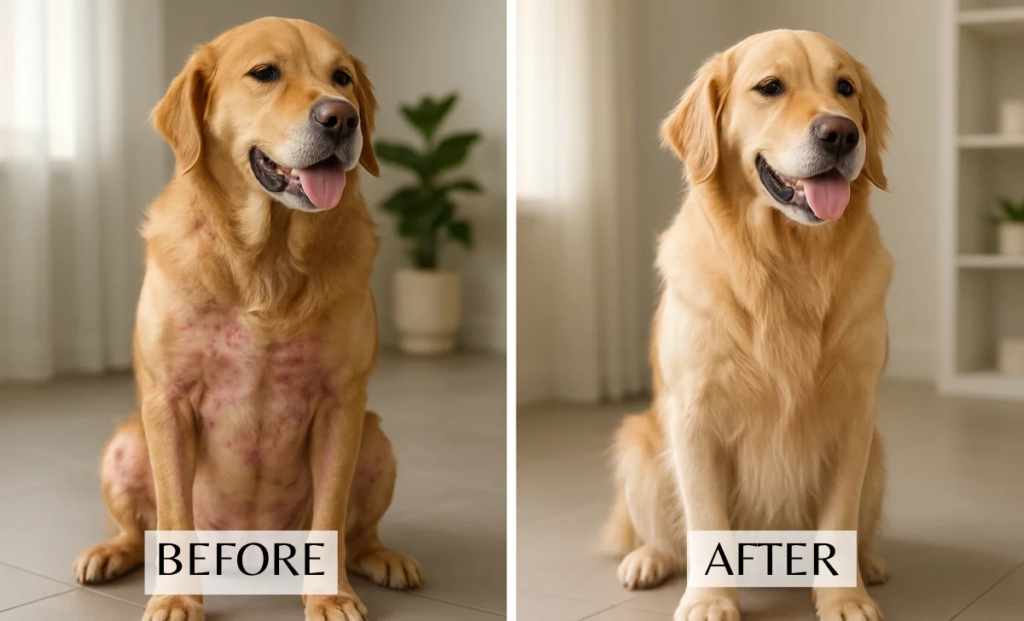
One of the biggest breakthroughs came when we started using medicated shampoos designed for pyoderma. These shampoos contain ingredients like benzoyl peroxide, chlorhexidine, or miconazole, which help kill bacteria, reduce inflammation, and clean the skin deeply.
For Max, switching to a benzoyl peroxide shampoo made a visible difference within a few days. His itching eased, his sores began to heal, and most importantly, he seemed happy again.
Always Work with Your Vet
Every dog’s case is different. That’s why your first step should always be a visit to the vet. Depending on the severity of the infection, your vet might recommend:
- Oral antibiotics to fight the infection from the inside out
- Topical creams or sprays for spot treatment
- Regular medicated baths to keep the skin clean and bacteria-free
With the right care and a little patience, dogs with pyoderma can heal and live comfortably again. The key is staying consistent with treatment and not ignoring those early warning signs.
Should You Bathe a Dog with Pyoderma?
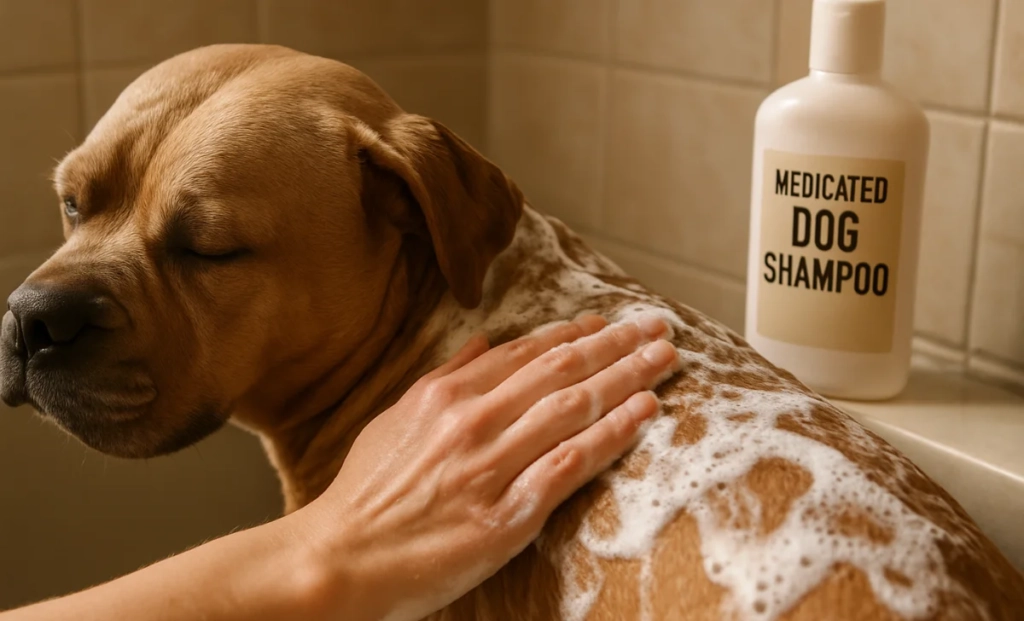
Yes, you should bathe a dog with pyoderma, but only with the right shampoo and at the right frequency. Properly, bathing can soothe irritated skin, remove harmful bacteria, and support healing.
When dogs like Bella, a sweet lab mix with pretty eyes, ears, and nose, were having painful flare-ups, I used to get this question all the time back on the farm. I wasn’t sure at first if taking a bath would help or hurt. But after we switched to a gentle, medicated shampoo, her face improved significantly in just one week. There were fewer scabs, less redness, and a lot less itching.
Why Bathing Helps
Medicated dog shampoos made for pyoderma do more than just clean the coat. They:
- Wash away bacteria, dirt, and allergens
- Soothe inflamed or itchy skin.
- Help prevent infections from spreading.
Bathing Bella twice a week with a shampoo containing benzoyl peroxide did wonders for her hair. There was no stopping her tail wagging after just a few baths.
Be Careful Not to Overdo It
Too many baths, even with medicated products, can dry out your dog’s skin. That can make things worse. Your dog’s ideal bathing schedule depends on their condition, coat type, and skin sensitivity.
Tip: Talk to your vet about how often you should bathe your dog. One to two medication baths a week can help most people with pyoderma, but only a doctor can give you the best advice.
Is Pyoderma Bacterial or Fungal?
Pyoderma is a bacterial skin infection in dogs, not a fungal one. It occurs when bacteria, most commonly Staphylococcus pseudintermedius, multiply on the skin due to irritation, allergies, wounds, or a weakened immune system.
These bacteria are usually harmless and naturally live on the skin. But when the skin’s barrier is damaged or inflamed, they can overgrow and cause infection. This leads to symptoms like redness, bumps, scabs, pustules, and itching.
The right treatment relies on correctly identifying the problem. Getting a diagnosis from a vet is important because fungal illnesses can look like bacterial ones. If you confuse the two, you might give your dog the wrong medicine, which could make them feel worse.
To help clarify the difference, here’s a quick comparison:
| Feature | Pyoderma (Bacterial) | Fungal Infection |
| Cause | Bacteria (often Staph species) | Fungi (e.g., Malassezia, ringworm) |
| Common Symptoms | Pustules, redness, scabs, itching | Greasy skin, odour, discolouration, flaking |
| Usual Triggers | Allergies, wounds, fleas, and scratching | Moisture, poor hygiene, weakened immunity |
| Treatment | Medicated shampoos (e.g., chlorhexidine), antibiotics | Antifungal shampoos, antifungal medications |
| Confirmed by | Bacterial culture or skin cytology | Fungal culture or microscopic exam |
Understanding that pyoderma is bacterial helps guide the use of appropriate products, such as antibacterial shampoos and antibiotics, so your dog can heal faster and stay more comfortable.
What is Good Dog Shampoo for Pyoderma?
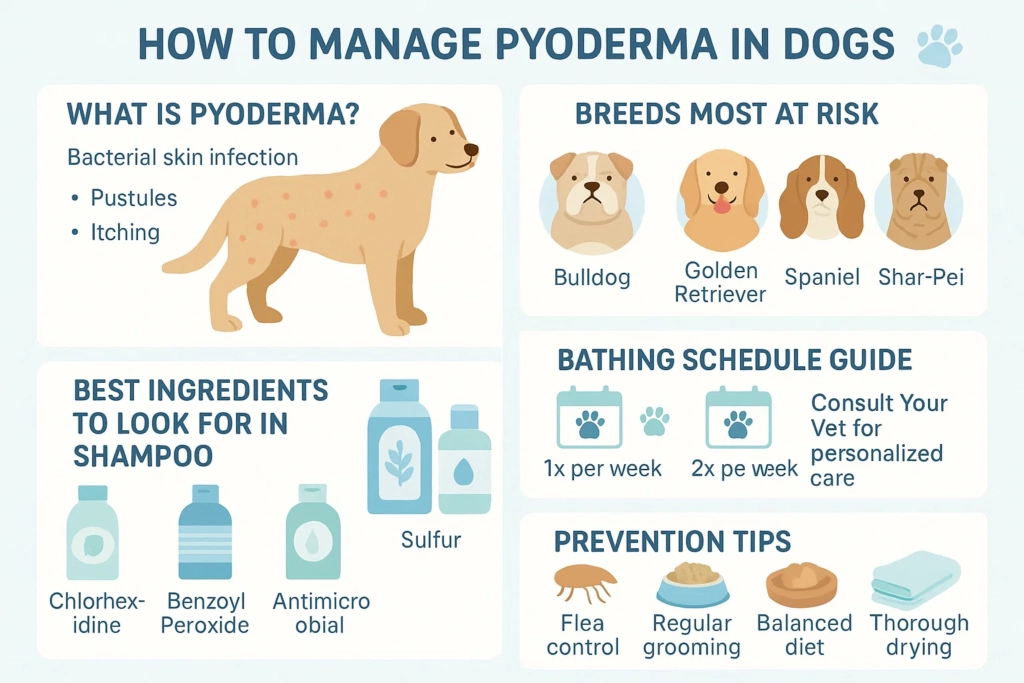
The best shampoos for pyoderma in dogs are medicated formulas containing ingredients like chlorhexidine, benzoyl peroxide, or sulfur. These ingredients help reduce bacteria, soothe irritation, and support skin healing.
Key Ingredients to Look For
Not all shampoos are made the same way, especially when treating skin infections like pyoderma. Look for shampoos that contain:
- Chlorhexidine – A gentle but powerful antimicrobial that kills bacteria and helps prevent further infection.
- Benzoyl Peroxide – Helps flush out hair follicles and reduce bacterial buildup.
- Sulfur and Salicylic Acid – Often combined to reduce inflammation and promote gentle exfoliation of scabby or crusty skin.
These ingredients work best when used regularly as directed, and most importantly, under the guidance of a veterinarian. Using the wrong shampoo or using it too often can make your dog’s skin worse.
What Worked for Us
Back on the farm, we saw incredible results using a benzoyl peroxide shampoo with Max. He had recurring bouts of pyoderma, and within a few weeks of regular use, his skin looked healthier, and the itching reduced noticeably. It wasn’t a miracle cure overnight, but it made a real difference.
Today, many vets recommend chlorhexidine-based shampoos as a go-to for bacterial skin infections. They’re widely available, safe for most dogs, and effective when used properly.
Can Humans Catch Pyoderma from Dogs?
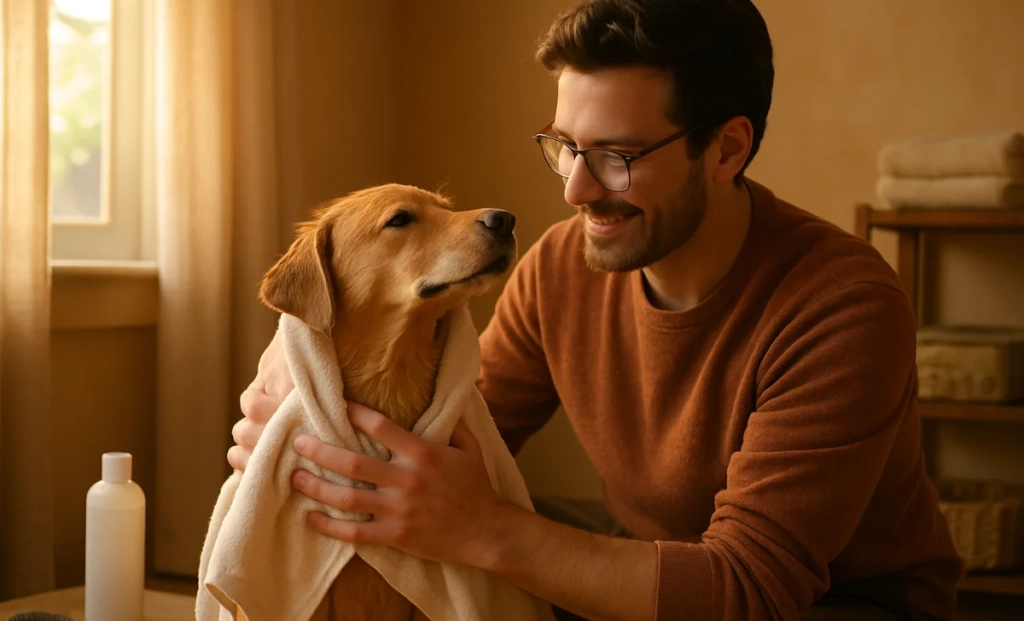
No, people usually can’t get pyoderma from dogs. Dogs can develop pyoderma, a bacterial skin condition. As my time on the dog farm grew, I heard more and more worries about whether pyoderma can spread to people. Fortunately, pyoderma doesn’t usually spread to people. This is a disease that dogs get, but people don’t usually get it.
Some of the bacteria involved, such as Staphylococcus pseudintermedius, are species-specific, meaning they don’t easily spread from dogs to people. Even when caring for a dog with pyoderma, it’s still a good idea to follow basic cleanliness rules. Wash your hands thoroughly after touching, washing, or treating a dog’s skin.
There is a very small chance that germs from a dog’s skin could make someone sick, especially if they have a weak immune system or an open wound. The risk is very low for most healthy people, though.
You don’t need to avoid cuddles or care, just be mindful. Wearing gloves when you are medicating baths or cleaning infected areas can provide extra peace of mind.
How to Avoid Pyoderma in Dogs?
Focus on regular grooming, good hygiene, flea control, and your dog’s overall health to help prevent pyoderma. From what I’ve seen, taking care of yourself, keeping your living place clean, and using good hygiene all help keep pyoderma at bay.
The most important thing is to keep your dog’s skin clean and dry. When you don’t dry and care for your skin properly, wet areas like under your legs, between your toes, and around skin folds can quickly become breeding grounds for germs. Baths (with gentle shampoos or shampoos allowed by your vet), brushing, and drying off with a towel after walks in the rain can help a lot.
People who have pyoderma often get it from fleas. When someone bites you, you might scratch or itch, which can lead to a bacterial infection. One of the best ways to lower this chance is to use flea prevention products regularly.
Diet is also important. A well-balanced, nutrient-dense diet for your dog strengthens their immune system, helping their skin naturally fight off infections. You should talk to your vet about any questions you have about what your dog needs if it has allergies or sensitive skin.
You can significantly reduce your pet’s risk of pyoderma by providing basic care and keeping them clean.
What Dog Breeds Are Prone to Pyoderma?

Dog breeds with skin folds, thick coats, or sensitive skin are more prone to pyoderma. These breeds are at higher risk because their skin tends to trap moisture and harbor bacteria, creating ideal conditions for infection.
Breeds with Skin Folds or Oily Skin
Dogs like Bulldogs, Pugs, Shar-Peis, and Basset Hounds are especially vulnerable due to their deep skin folds. These folds can easily trap dirt, sweat, and bacteria, leading to irritation and infection if not cleaned regularly. I experienced this situation with Rocco, a bulldog on the farm, who struggled with repeated flare-ups in the folds of his face and armpits.
Breeds with Thick or Water-Repellent Coats
Golden Retrievers, Labrador Retrievers, Cocker Spaniels, and German Shepherds are also at risk. Their dense or oily coats can retain moisture, especially after swimming or bathing, and make it harder for the skin to breathe. Without proper drying and grooming, bacteria can multiply rapidly.
If you own one of these breeds, prevention is the key. Regular grooming, cleaning skin folds, thoroughly drying your dog after getting wet, and using a vet-recommended shampoo can help keep your dog’s skin healthy and reduce the risk of pyoderma.
Though some breeds are more prone than others, any dog can develop pyoderma under the right (or wrong) conditions, so staying alert to skin changes is always a smart move.
How Often Should I Wash My Dog with Pyoderma?
Dogs with pyoderma should generally be bathed 1 to 2 times per week using a medicated shampoo, depending on the severity of the condition. The goal is to keep the skin clean, reduce bacteria, and promote healing without over-drying or irritating the skin.
The right frequency can vary from dog to dog. Some may benefit from more frequent baths during active flare-ups, while others with milder symptoms may only need weekly maintenance. On the dog farm, that was definitely the case. Max needed medication baths every two weeks to keep his flare-ups under control. Bella, on the other hand, only required baths once a week, which worked well for her.
It’s important to use a shampoo your vet recommends and to follow all directions carefully. Even if you use the right product, giving your dog too many baths can dry out their skin and make the problem worse. You should always talk to your vet about the best way to bathe your dog, based on your dog’s breed, skin type, and stage of pyoderma.
To help your dog get better and prevent infections from recurring, be consistent, handle him gently, and make sure he rinses and dries properly after every bath.
Final Words
It may seem hard to deal with pyoderma, but it’s not. All you need is the right shampoo, a gentle routine, and help from your vet. Now you know how to help your dog feel good about themselves so that they can be themselves.
Take care of Max, Bella, Rocco, and the other dogs at the farm. They taught me how important it is to be patient and give good care. No matter how hard you try, your dog can get over pyoderma and be their happy, tail-wagging self again.
Quick Answers to Your Dog Pyoderma Questions
Here are 8 helpful FAQs to clear up common doubts dog owners have about pyoderma, so caring for your pup should feel a little easier.
1. Can pyoderma in dogs heal on its own?
No, pyoderma rarely heals without treatment. It usually requires medicated shampoos, antibiotics, or both to fully clear the infection and prevent it from coming back.
2. Can I use human shampoo on my dog with pyoderma?
No, human shampoos can irritate a dog’s skin and worsen pyoderma. Always use a vet-approved medicated dog shampoo specifically designed for skin infections.
3. Will pyoderma come back after treatment?
Yes, it can recur, especially in dogs with allergies, chronic skin issues, or underlying conditions. Regular grooming and prevention can reduce the risk.
4. What does pyoderma look like on a dog?
It often appears as red bumps, scabs, pustules, hair loss, or flaky skin. It may also have a foul smell and feel warm or crusty to the touch.
5. How long does it take for pyoderma to heal?
With proper treatment, mild cases may improve in 2–3 weeks. Severe or deep pyoderma may take several weeks or longer and require close veterinary care.
6. Can puppies get pyoderma too?
Yes, puppies can develop a form called “puppy pyoderma,” which is usually mild and responds well to topical treatment. It’s more common in wrinkly or fluffy breeds.
7. Should I trim my dog’s fur if they have pyoderma?
Yes, trimming around infected areas can help keep the skin dry and allow medication to work better, but avoid shaving too close without vet advice.
8. Can diet affect pyoderma in dogs?
Yes, poor nutrition or food allergies can weaken the immune system and contribute to recurring skin infections. A balanced, allergy-friendly diet can help.