How to Choose the Right Shampoo for Double-Coated Dogs
“To keep them cool in the summer, you have to shave them.”
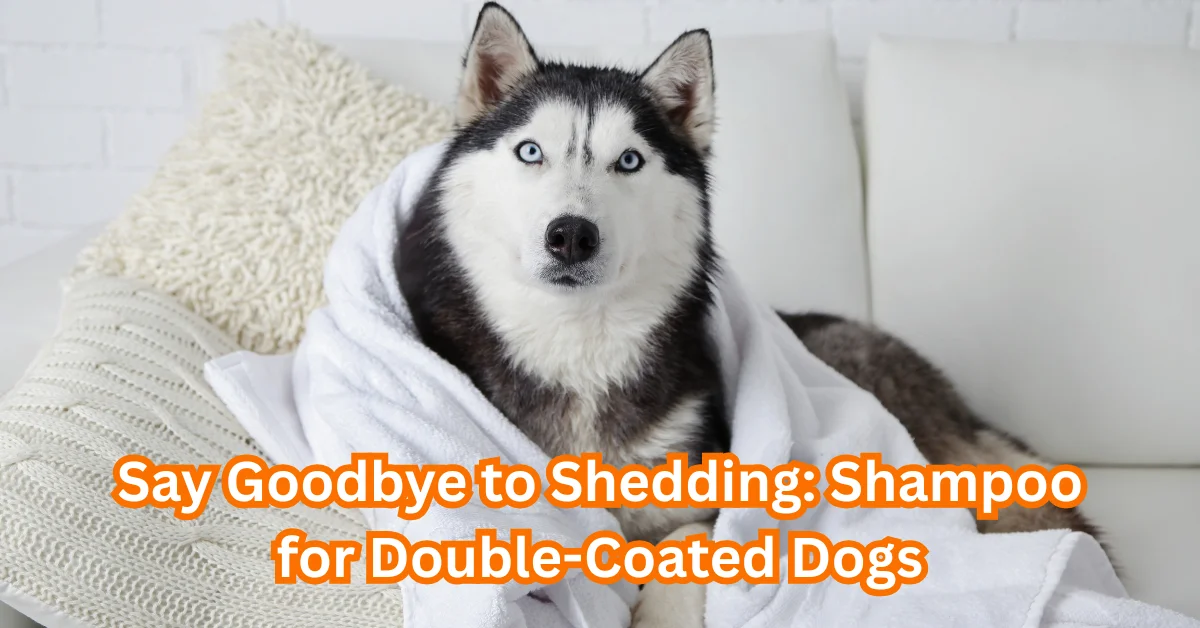
That’s a harmful myth many people with double-coated dogs hear. I thought the same thing until I saw how badly my husky Buti’s hair changed after I made a bad grooming choice. You know how hard it can be to take care of a thick double coat if you’ve ever dealt with constant shedding, tangles that won’t come out, or dry, itchy skin. The right shampoo can indeed make a huge difference.
You will learn what to look for (and what not to look for) in shampoo for dogs with two coats in the next few minutes. This will help your dog’s coat stay healthy, soft, and safe all year.
Why Should You Use Shampoo Specifically for Double-Coated Dogs?
Because not just any shampoo will work, double-coated dogs need products designed just for them; otherwise, you risk damaging their coat, drying out their skin, or making shedding even worse. The right shampoo protects their coat structure, reduces matting, and keeps their skin healthy underneath all that fluff.
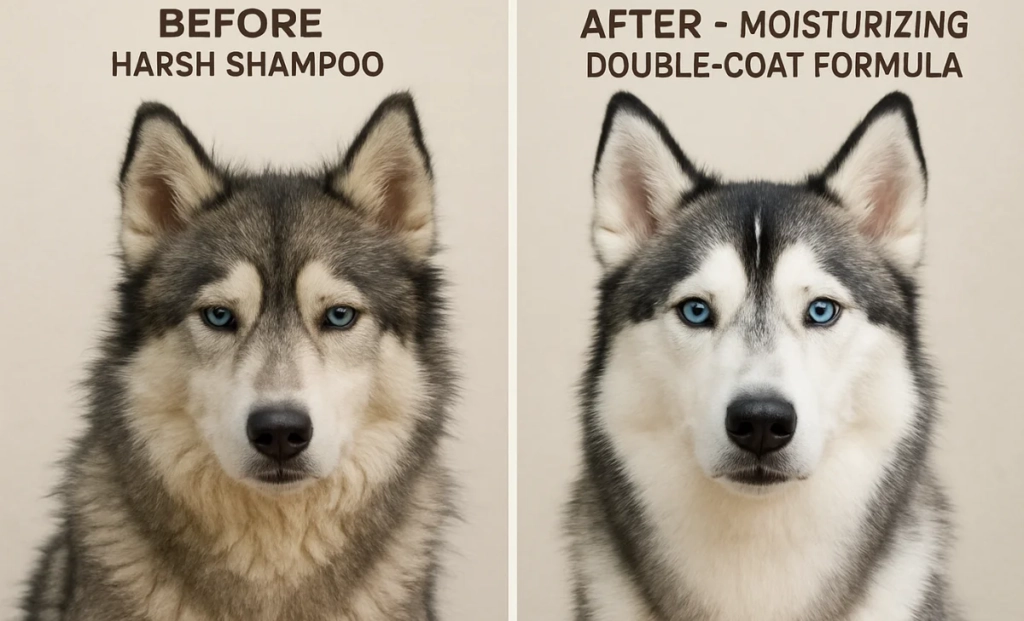
I learned this with my Husky, Buti. In the summer of 2023, I used a “regular dog shampoo” that smelled amazing, but within a few days, his coat was dull, itchy, and shedding like crazy. Turns out, it stripped the natural oils, leaving his undercoat dry and tangled. That was the moment I realised: double-coated dogs need special care, starting with the right shampoo.
Here’s why it matters:
Helps Maintain the Coat’s Structure
Double-coated dogs have two layers: a soft undercoat and a protective outer layer.
The right shampoo cleans both layers without stripping essential oils or flattening the coat. This helps keep their natural texture intact, so your dog looks fluffy, not frizzy or greasy.
Reduces Shedding and Mats
The right formula can significantly reduce shedding. It loosens dead fur and helps to prevent mats, especially around problem areas like the chest, belly, and behind the ears. With Buti, I noticed a huge difference after switching to a shampoo made for double coats. No more daily fur storms on the couch.
Moisturises the Undercoat
If your undercoat is dry, it will be hard to shed. Double-coated dogs need more than shine on the outside. They need moisture deep down. A good shampoo keeps the undercoat soft and soothes the skin, helping it resist breaking and making it easier to brush.
Gentle on Sensitive Skin
Many double-coated breeds have skin that reacts badly to harsh ingredients. That’s why formulas with natural, hypoallergenic ingredients are best. Buti used to scratch himself like crazy after baths, until I switched to a soothing oatmeal-based shampoo. Now, bath time is actually relaxing (for both of us).
What Ingredients Should You Look for in Shampoo for Double-Coated Dogs?
Choose shampoos with gentle, moisturizing, and natural ingredients, made to nourish thick double coats without stripping natural oils.
Double-coated dogs like Huskies, Collies, and Shelties need ingredients that hydrate the undercoat, soothe the skin, and reduce tangles, without causing irritation or build-up.
Buti looked more like a cotton ball when he came out of the bath one time. The shampoo I used for him contained sulphates, which made his hair dry and dull. I started carefully reading ingredient lists after that, and there was a huge change.
Here’s what to look for:
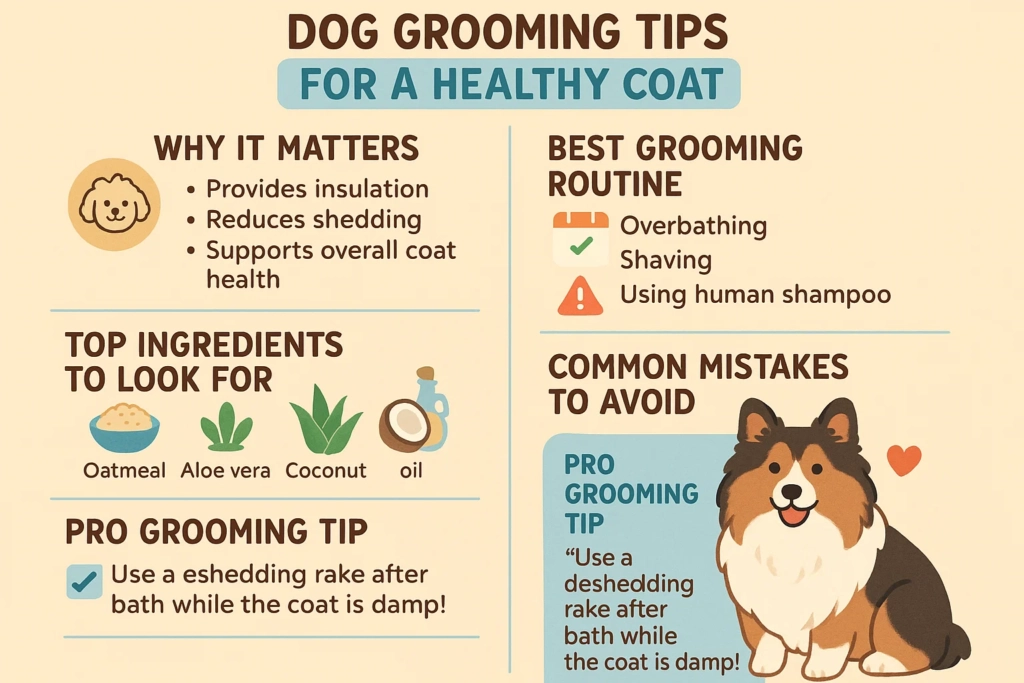
Muesli: Gentle and soothing, it’s great for dogs with allergies or dry skin because it helps soothe and calm their skin. It makes the skin less red and flaky without making the clothes heavier.
Aloe Vera: Keeps skin hydrated and helps heal it; it helps control swelling and irritation. This part is important if your dog scratches a lot or has hot spots.
Coconut oil conditions the skin and hair, making fur softer and easier to brush. It also makes the skin stronger. It also makes hair shine and less likely to break.
Lavender: Calms nerves and smells great. Lavender doesn’t just help people relax; it also helps dogs. If bath time makes your dog nervous, this natural smell might help calm them down.
The tea tree oil can help with skin problems and fight bacteria. Diluted tea tree oil can help with minor skin infections or irritations. Dogs can get sick if they get too much, so only buy shampoos that list the safe amount.
Stick to Natural Ingredients: Avoid harsh chemicals like parabens, sulphates, and synthetic fragrances. They can dry out your dog’s skin, remove natural oils, and cause allergic reactions. Put the ingredient list back if it reads like a science book.
Ever wondered why your dog’s shampoo lathers differently from your neighbour’s?
Top Features to Look for in Shampoo for Double-Coated Dogs
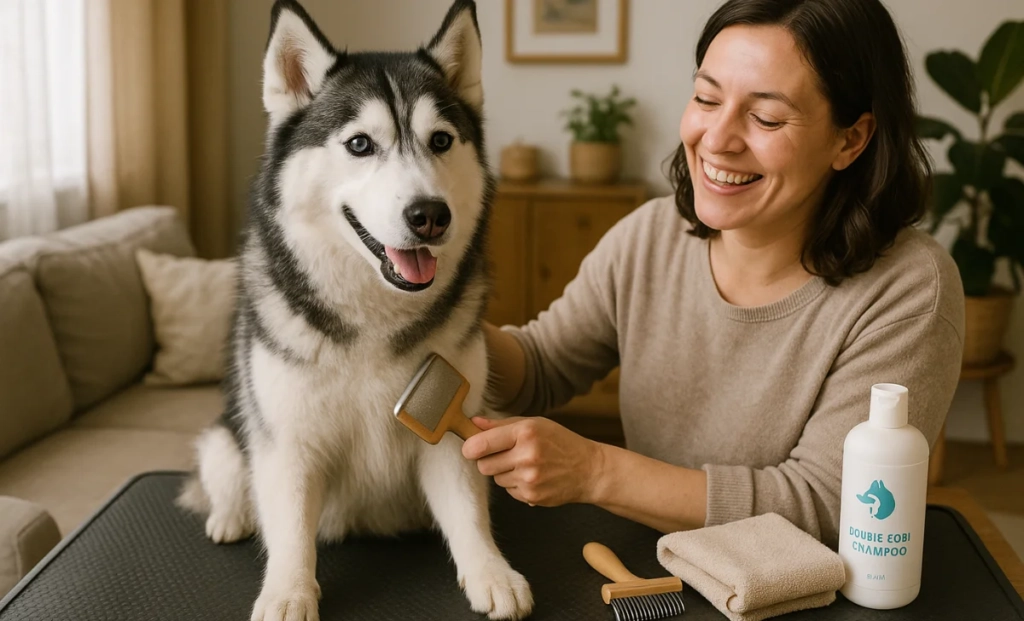
The best shampoo for double-coated dogs should moisturise deeply, reduce shedding, and be gentle on sensitive skin.
These dogs have two layers of fur, and both need proper care. A quality shampoo hydrates the undercoat while keeping the topcoat smooth and shiny, without stripping away natural oils.
When I first got Buti, I didn’t know this. I just grabbed whatever shampoo smelled good, which was a big mistake. His coat got matted, dry, and he scratched nonstop. That time, I learned that double-coated breeds need special shampoos designed just for their unique needs.
Look for formulas that offer deep moisture to both layers of fur. This helps prevent dryness and breakage, making the coat easier to manage. The right shampoo should also help control shedding by conditioning the hair and strengthening the follicles, which means less loose fur around the house. It should reduce tangles and mats by smoothing the coat and making brushing easier after bath time.
Choose a shampoo that checks all these boxes, and you’ll see (and feel) the difference in your dog’s coat after just a few washes.
How to Reduce Shedding in Double-Coated Dogs
To reduce shedding in double-coated dogs, use an anti-shedding shampoo, brush regularly, and feed a healthy, skin-supporting diet.
Although it’s normal for Huskies, Collies, and Shelties to shed, especially during coat blows, there are easy ways to keep it under control so you don’t lose your mind (or your couch).
When Buti started shedding so much that I could’ve made a second dog out of the fur, I knew I had to step up my grooming game. Here’s what worked for us, and what will work for you too:
Use Anti-Shedding Shampoo Regularly
Taking regular baths with a good shampoo that stops hair loss can make a big difference. These shampoos condition the hair and loosen dead fur, reducing the likelihood of hair falling out in clumps. Try to do it every 2 to 4 weeks, but it depends on how active your dog is and how clean his coat is.
Brush Frequently with the Right Tools
You have to brush your teeth. Loose undercoat hair can get all over the house, but brushing your dog three to four times a week (or every day during shedding seasons) will keep it from happening. For double layers, I started using a de-shedding tool, and it really changed the game. It gets through to the base without hurting the top layer.
Feed a Skin-Supporting Diet
Don’t forget to eat well. The food your dog eats changes their skin and fur from the inside out. Eating a lot of omega-3 and omega-6 fatty acids can help reduce swelling, strengthen hair cells, and prevent hair loss. When I switched Buti to a fish-based food with extra skin support, I saw a lot less fur on the floors and a shinier coat.
By combining the right grooming routine, tools, and nutrition, you won’t stop shedding entirely, but you’ll definitely keep it manageable, and your vacuum will thank you.
How Often Should You Bathe Your Double-Coated Dog?
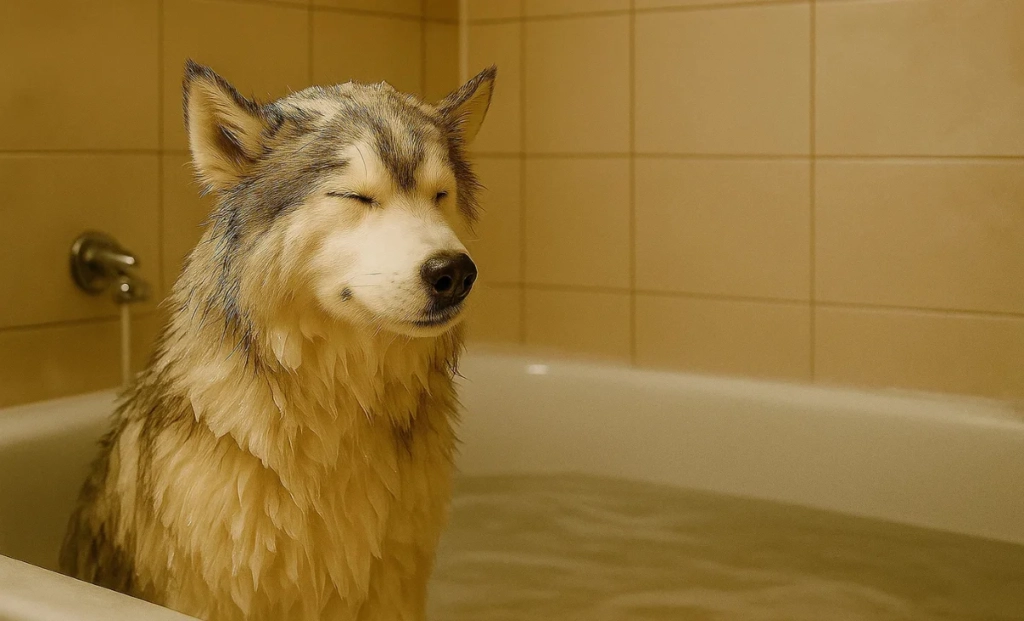
You should bathe your double-coated dog every 4–6 weeks, depending on the breed and coat condition. Bathing too frequently can strip essential oils from the coat and skin, leading to dryness, irritation, and more shedding. But with the right routine, you can keep your dog clean, healthy, and fluffy without harming their double coat.
General Bathing Guide by Breed
Huskies usually do best with a bath once a month. Their dense undercoat sheds seasonally, so bathing during coat-blow periods can help manage all that loose fur.
Collies need a bath every 4–6 weeks. In between, regular brushing is a must to avoid tangles and maintain the smooth, glossy look of their coat.
Shelties have similar needs to Collies; bathing every 4–6 weeks keeps their coat fresh and helps control shedding, especially when paired with consistent brushing.
Bathing Tips for Double-Coated Dogs
In between baths, regular grooming is key. Brushing a few times a week removes loose fur, prevents mats, and spreads natural oils through the coat.
Avoid over-bathing, even if your pup loves to roll in dirt. Too many baths can dry out their skin and lead to itching or dull fur. Always use a gentle shampoo made for double-coated dogs to protect both the topcoat and undercoat.
Last Word
After everything we’ve talked about, one thing is clear: when it comes to cleaning, double-coated dogs need a little extra love. It all starts with the right shampoo. You now know how to keep your dog’s coat healthy, shiny, and shedding-free with the right products, features, and habits. Also, let’s be honest: you feel good when your dog does. Grooming doesn’t have to be a chore; it can be a way to spend time together and show care. Now that you’re calm, get the right shampoo, and give your fluffy friend the care they deserve. They put all their faith in you, and you can handle this.
What Double-Coated Dog Owners Ask the Most
1. Can I use human shampoo on my double-coated dog?
No. Human shampoo is too harsh for dogs and can disrupt their skin’s pH balance, leading to dryness, irritation, or allergic reactions.
2. Is conditioner necessary for double-coated dogs?
Yes, a light, dog-safe conditioner helps detangle fur, prevent matting, and moisturize the undercoat without weighing it down.
3. Do double-coated dogs need professional grooming?
Professional grooming is helpful, especially during seasonal shedding. Groomers have tools to remove loose undercoat and maintain coat health safely.
4. Can I shave my double-coated dog in summer?
No. Shaving ruins the coat’s natural insulation and may lead to overheating or sunburn. Regular grooming is a safer way to keep them cool.
5. What brush works best for double-coated dogs?
A slicker brush and an undercoat rake are best. They reach the dense undercoat and remove loose fur without damaging the top layer.
6. How do I prevent hot spots in double-coated dogs?
Keep their skin clean and dry, brush regularly, and avoid over-bathing. Use gentle, hypoallergenic products to avoid irritation.
7. Can bathing too often cause skin problems?
Yes. Over-bathing strips natural oils, leading to dryness, itching, and potential skin infections. Stick to a 4–6 week schedule.
8. How long does it take for a double coat to dry?
It can take several hours to fully dry. Use a high-velocity dryer (on low heat) or towel dry followed by brushing to avoid damp mats.
9. What are the signs of a damaged double coat?
Frizziness, patchy shedding, rough texture, and excessive dandruff can indicate coat damage or improper grooming habits.
10. Is deshedding shampoo safe for all double-coated breeds?
Most are safe if labeled for dogs and made with natural ingredients. Always check for harsh chemicals and test a small area first.