How to Choose the Right Shampoo for Skunked Dogs
Have you ever seen your dog run back from the trees and figure out too late that they ran into a skunk? That moment of fear is very real. It made my dog Rumi, and I gagged the first time it happened. We were both sick before we even got inside. It smells awful, and if you’ve been through it, you know how strong the smell can be. But take a deep breath (maybe not too deep!). There is a way out. This post will show you the best shampoos for dirty dogs, along with some quick, easy fixes you can do at home. By the end, you’ll know how to safely de-skunk your dog and make him smell like new again.
What Is the Best Shampoo for Skunked Dogs?
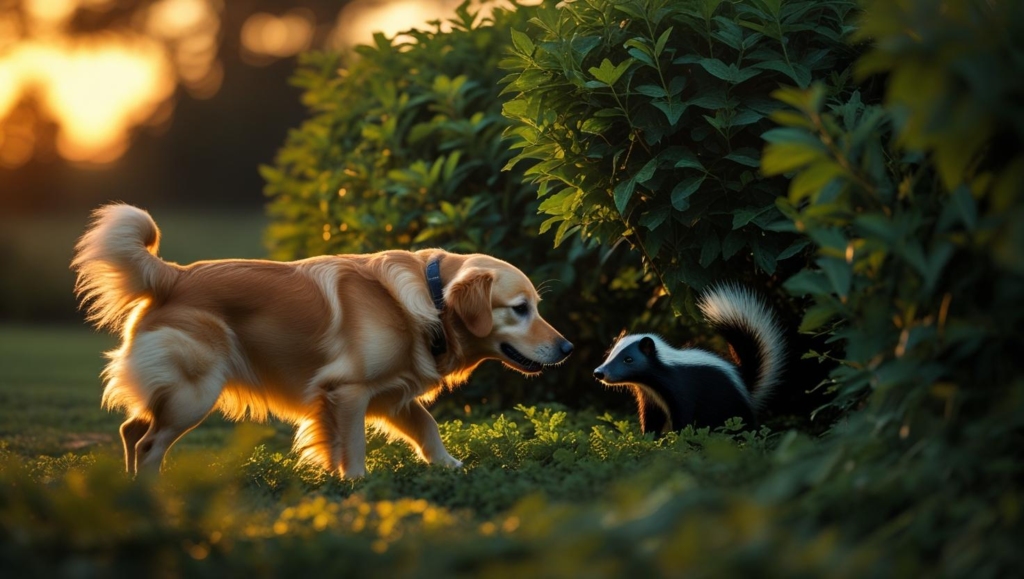
An effective shampoo that neutralizes the smell without hurting your dog’s skin is the best one for a skunk dog. You can use a commercially made skunk shampoo or make a strong home cure with things you already have at home.
Let’s be real, when your dog gets sprayed, your first thought isn’t which brand to buy. It’s “Eliminate this smell now.” I’ve been there. A skunk once hit my dog Rumi while we were walking early in the morning. Even though she was waving her tail like nothing happened, I knew we were in for a long day as soon as I smelled that terrible smell. I had to move quickly. I learned which soaps really work and which ones cover up the scent.
Commercial Shampoos That Work
Commercial skunk shampoos are made to target and neutralise skunk spray. They destroy the smell-causing oily molecules and cover them up. These products work really quickly, which is great when you’re in a hurry.
Skunk-Off is a lifesaver. It worked fast on Rumi the first time she got sprayed. I could actually breathe again within minutes of using it. It’s gentle and doesn’t dry out her skin, which was a huge relief.
PetArmor is another solid choice. It cuts through strong odors and rinses clean. Rumi has sensitive skin, and this one didn’t cause any itching or flaking afterward.
Vet’s Best is perfect if you prefer something more natural. It’s made with essential oils and plant-based ingredients. I tried this on Rumi the second time (yes, it happened again) and her coat felt super soft after. Plus, no lingering smell.
Homemade Solutions That Actually Help
If you don’t have time to grab a store-bought shampoo, don’t panic. You probably have everything you need at home.
Making your own mix is easy; all you need is baking soda, hydrogen peroxide, and dish soap. There is good science behind it. It gets rid of the smell, breaks down the skunk’s sticky spray, and helps lift it all off your dog’s fur with the baking soda.
When I first used Rumi, I used this mix. I was so desperate that I didn’t even have gloves on. I put it on her, mixed the ingredients, and then left it on for a while. On the first wash, the smell didn’t go away entirely, but it got less strong enough that we could both breathe again.
What’s Right for You?
Use a store-bought shampoo if you want to save time and effort. Making something at home can work if you like natural treatments or need something right away. In either case, you want to get rid of that skunky oil and make your dog feel better.
And trust me, your dog will thank you. Rumi sure did, once the hugs and sniffles were safe again.
How Do I Remove the Skunk Smell from My Dog?
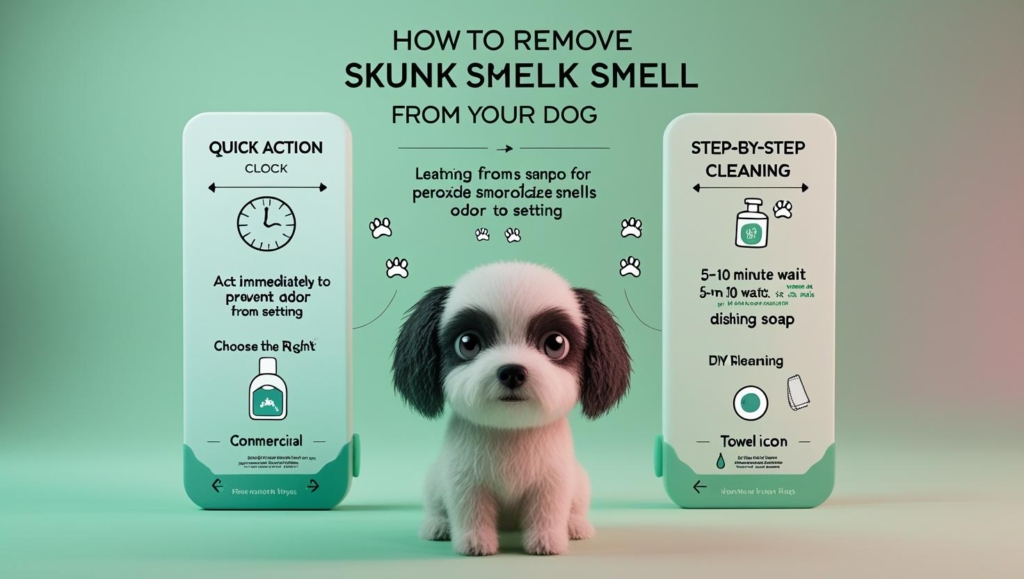
To remove skunk smell from your dog, act fast and use the right cleaning solution. The sooner you treat it, the better your chances of stopping the odor from setting in.
I didn’t know what to do when Rumi lost the first time. I freaked out and tried to give her a normal bath, but the smell got worse. It got into her hair, her collar, and even the towel I used. I found out then that normal shampoo doesn’t work. A skunk spray-made item is what you need.
Step 1: Use a Skunk-Specific Shampoo
Scented shampoo should be your first step. There are things like Skunk-Off and PetArmor that can break down the oily chemicals in skunk spray. These things work quickly and make your dog feel better. You can make your own if you don’t have one handy.
The homemade solution I used with Rumi is still my backup to this day: a mix of hydrogen peroxide, baking soda, and dish soap. It cuts through the smell surprisingly well. Just be careful not to get it in your dog’s eyes or mouth.
Step 2: Try a Vinegar and Baking Soda Mix
Mix one part vinegar with four parts water and add a little baking soda. This will work if you don’t have hydrogen peroxide. There was no peroxide in the house when Rumi got sprayed a second time (she never learns), so I used this mix instead. It was on her hair for about five minutes before I rinsed it off. It really helped, especially with the smell that wouldn’t go away.
Step 3: Rinse Very Thoroughly
No matter what you use, make sure you rinse your dog well with warm water. This is very important. Leftover soap or vinegar can irritate the skin. Whenever I do this to Rumi, I take my time. The skunk spray likes to stick around her belly and behind her ears.
Cleaning up after a skunk spray is stressful, but it doesn’t have to be a disaster. Once you know what works, you can handle it calmly and help your dog feel better fast. And if your dog is like Rumi, it won’t be the last time she investigates a suspicious bush.
Can I Use Homemade Skunk Shampoo for My Dog?
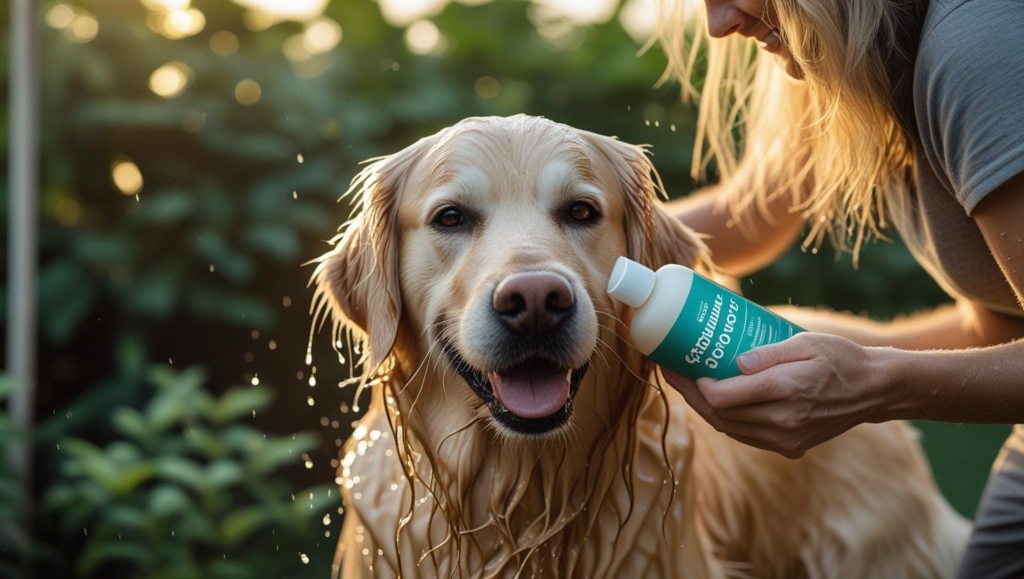
Yes, you can use homemade skunk shampoo for your dog, and it actually works really well when made correctly. It’s a fast, affordable, and reliable way to fight that awful skunk smell using simple household items.
The first time I sprayed Rumi, I didn’t have any fancy dog shampoo at home. Because I was scared, I quickly looked online and found the hydrogen peroxide and baking soda mix. I wasn’t sure, but I needed help badly. After just a few minutes of use, the smell was already getting better. We didn’t get it right the first time, but it kept us from a complete disaster.
Why Homemade Shampoos Work
Skunk spray is oily and hard to wash out. That’s why just water or regular shampoo doesn’t help. You need ingredients that break down the oils and neutralize the smell. Homemade mixtures work because they tackle the problem from multiple angles.
| Ingredient | Purpose |
| Baking Soda | Neutralizes odors and gently scrubs the coat |
| Hydrogen Peroxide | Breaks down the oily compounds in the skunk spray |
| Dish Soap | Cuts through grease and helps lift the skunk oil from your dog’s fur |
The following lists the ways each element helps: Rumi experienced a significant change after taking this mix. I mixed the ingredients in a bowl, then put it on her coat, being careful not to get it in her eyes or mouth. I let it sit for a few minutes. She didn’t like the bath, but she smelled better by the time I washed her off. It wasn’t a magic bullet, but it kept us from crying on the couch that first day.
Benefits of Homemade Skunk Shampoo
The best part? I didn’t have to run to the store or spend a ton of money. All the ingredients were already in my kitchen. That made the whole situation way less stressful.
Homemade shampoos are also gentle when made properly. Rumi has pretty sensitive skin, and she didn’t have any reaction. It was a relief to know I could help her feel better without causing any irritation.
Another bonus is flexibility. If the smell is super strong, I just tweak the amounts a bit or repeat the bath after a few hours. It’s simple and effective.
If your dog ever gets skunked and you’re caught off guard like I was, this homemade mix is a real lifesaver. Just make sure to avoid the eyes and don’t store the mixture; it loses its power quickly. But when used fresh, it can absolutely save your dog (and your nose) from a skunky nightmare.
How to Make a Skunk Shampoo Recipe for Dogs?
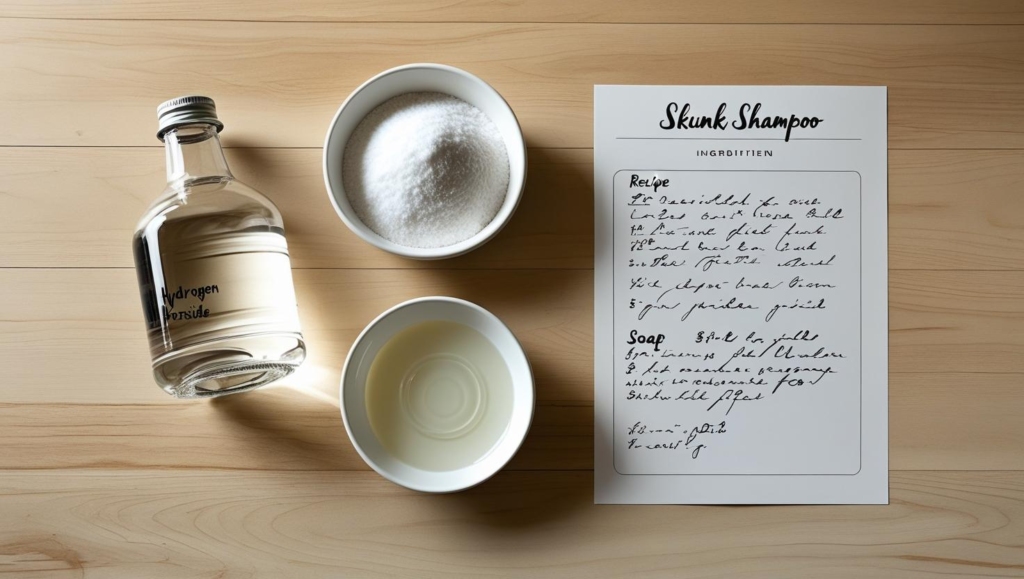
You can make an effective skunk shampoo for your dog at home using just three ingredients. It’s quick to prepare, easy to apply, and works well in emergencies.
It was around 6 a.m. when Rumi was sprayed for the first time. There were no stores open. I did not have any store-bought skunk shampoo handy. It was hard for a while, but then I remembered reading about a do-it-yourself mix. H2O2, baking soda, and dish soap were the first things I grabbed when I ran to the kitchen. It turned out that the mix changed everything.
Ingredients You’ll Need
To make the shampoo, you’ll need:
Hydrogen peroxide (3%)
Baking soda
Liquid dish soap
All of these were things I had in my kitchen when I got up that morning. Hydroxybromide breaks down the skunk’s oily smell. The baking soda takes away the smell. Dish soap removes the oils from your dog’s fur. They make a strong and safe cleaner when mixed.
How to Mix and Use It
In a bowl or large container, combine 1 quart of hydrogen peroxide, 1/4 cup of baking soda, and 1 teaspoon of dish soap. Stir the mixture gently until everything is blended well.
I used gloves when applying it to Rumi’s coat, focusing mostly on her neck and chest, where she had been sprayed. Be very careful to keep the solution away from your dog’s eyes, nose, and mouth.
Let the mixture sit on your dog’s fur for about five minutes. I talked softly to Rumi while I waited, trying to keep her calm. She hates baths, and this one was especially stressful. But she was patient, maybe because she couldn’t stand the smell.
After five minutes, rinse everything off with warm water. Rinse thoroughly. If any of the mixture stays behind, it could irritate your dog’s skin. I took my time and made sure Rumi was completely clean before drying her with an old towel.
Keep These Tips in Mind
Only mix this shampoo right before use. Don’t try to store it. The chemical reaction weakens over time and can even become unsafe in sealed containers.
This DIY skunk shampoo isn’t fancy, but it works. While Rumi was in need, I could help her without going to the store or spending money. You’ll be glad you know how to make this if that ever happens to your dog. I got my sweet-smelling dog back and a bad morning turned into something I could handle.
How Long Does It Take to Get Rid of a Skunk Smell on Dogs?
It usually takes between a few hours to a couple of days to fully remove skunk smell from your dog. The exact time depends on how strong the spray was and how quickly you treated it.
When Rumi got sprayed the first time, the smell hit us like a wall. I used the homemade hydrogen peroxide mix right away. After the first bath, the worst of the stink faded within an hour or two. But let me be honest, the scent didn’t completely vanish that day.
What to Expect Right After Treatment
In the first couple of hours, you should see a change if you use the right shampoo or make your own solution right away. There will still be a smell, but it will be manageable. She could go back to the porch after her first rinse, but not to the couch yet.
On the first night, there was still a faint smell in her hair, mostly around her neck, where the spray was strongest. So, the next morning, I gave her another bath. The second round was very important. It didn’t smell much by the end of the second day.
Full Odor Removal May Take Time
Some dogs may need a second or even third bath, even after a good first one. It’s normal for some of the smell to stay, especially if the skunk hit them in the face or chest. Skunk spray’s oils don’t come off easily. They stick to fur and take a while to break down.
It’s really important to thoroughly rinse your dog. I spent extra time with Rumi during each rinse, especially around the thicker parts of her coat. Skipping this step can leave behind residue that keeps the smell hanging around.
The smell should go away after a few days. You can either take another bath or try a different product. Don’t worry, though. If you wait and do things the right way, your dog will soon smell like herself again. I knew we were through it when I could hug her without shaking. Rumi did it.
Are Skunk Shampoos Safe for My Dog?
Yes, skunk shampoos are safe for dogs when used the right way. Whether you use a store-bought product or a homemade mix, the key is choosing gentle ingredients and applying them with care.
I was afraid of using something too strong on Rumi when I sprayed her for the first time. Her skin is sensitive, and scented shampoos have made it worse in the past. I used a home-made product at first and made sure she didn’t get it in her eyes, nose, or mouth. She was fine and didn’t smell as bad. But what happened taught me to be careful about what I put on her skin.
Choose Dog-Safe Products Only
Not all shampoos are created equal. Some products made for humans contain harsh chemicals or artificial fragrances that can irritate a dog’s skin. Use only formulas made for cats. It’s important to me that the brands I buy are natural and come from a vet I trust. Rumi’s second run-in with a skunk worked great with Vet’s Best Skunk Odor Shampoo, and it didn’t dry out her hair.
If you want to do it yourself, hydrogen peroxide, baking soda, and dish soap are the most common combination. Just make sure you use the right amounts and mix it every time. I’ve used this on Rumi more than once with no problems as long as I did everything the right way.
Rinse Well and Dry Gently
Rinse really well is one of the most important things I’ve learned. I always give Rumi a good rinse for a few minutes after washing to make sure there is no buildup. Her skin can get irritated by old items, especially where her fur is thick. After that, I put her in a room with good air flow so her coat dries properly and stays clean.
Each dog is unique. Some people may not be able to use what works for someone else. Talk to your vet before giving your dog a new product if it has allergies or very sensitive skin. But if you use skunk products correctly, especially those safe for pets, they can clean and comfort your dog without hurting them.
Rumi is living proof. She’s been skunked more than once, and thanks to the right care, she always comes out smelling fresh and feeling fine. And yes, she still charges into every bush like it’s a new adventure.
Choosing the Right Shampoo for Skunked Dogs
You now know how to deal with one of the smelliest shocks a dog owner can get. The right method can make all the difference, whether you use store-bought shampoos or easy mixes you make at home. You need to move quickly, be gentle, and pick what is best for your dog’s skin.
Meeting a skunk can be scary, but you don’t have to feel useless afterward. Yes, I’ve been there with Rumi before, and I promise it gets better once you know what to do. Take a deep breath, gather your things, and remember that you can do this. You can count on your dog to be happy and smell good again after a little care.
And if your dog is anything like Rumi, you might want to keep that homemade mix handy. Just in case.
FAQ About Shampoo for Skunked Dogs
Can I use tomato juice to remove skunk smell from my dog?
Tomato juice may mask the smell temporarily, but it doesn’t neutralize skunk spray. Use proper skunk shampoos or DIY mixes for better results.
Is skunk spray harmful to my dog’s health?
Skunk spray is not toxic but can cause eye irritation, nausea, or temporary disorientation if sprayed directly in the face.
Can skunk smell linger in my house after my dog is sprayed?
Yes, the odor can transfer to furniture, carpets, or bedding. Clean affected items immediately and ventilate your home well.
How can I get skunk smell out of my dog’s collar or leash?
Soak them in a mix of baking soda, hydrogen peroxide, and dish soap, then rinse thoroughly. Repeat if needed.
Should I take my dog to the vet after a skunk spray?
If your dog shows signs of eye irritation, vomiting, or breathing issues, consult your vet as soon as possible.
How do I prevent my dog from getting sprayed again?
Keep your dog on a leash at night and avoid letting them roam near wooded or bushy areas where skunks may hide.
Can I use baby shampoo to wash my skunked dog?
Baby shampoo is gentle but won’t remove skunk odor effectively. Use a skunk-specific or DIY odor-neutralizing shampoo instead.
What if the skunk smell returns after a few days?
Residual oils can linger in fur. Rewash your dog using the same treatment and be sure to rinse thoroughly.
Can I use essential oils to help with the smell?
Avoid essential oils unless approved by your vet. Many are toxic to dogs, even in small amounts.
How long should I wait between skunk shampoo treatments?
Wait at least 12–24 hours between treatments to avoid over-drying your dog’s skin. Use a moisturizing dog conditioner afterward if needed.